
Ginger is more than a flavorful spice used in teas, soups, curries, and other dishes around the world. For centuries, it has also been used in traditional medicine for digestive discomfort, nausea, pain, and other common health concerns.
Today, researchers continue to study ginger and its naturally occurring compounds, particularly gingerols and shogaols. These compounds have antioxidant and anti-inflammatory properties and may help explain some of ginger’s potential effects on the body.
Research suggests that ginger may be particularly useful for certain types of nausea, including pregnancy-related nausea. Studies have also explored its potential role in supporting digestion, reducing menstrual pain, easing some symptoms of osteoarthritis, and improving certain markers of metabolic health.
However, not every traditional claim about ginger is supported by strong clinical evidence. Some potential benefits are better established than others, and ginger should not be considered a replacement for appropriate medical treatment.
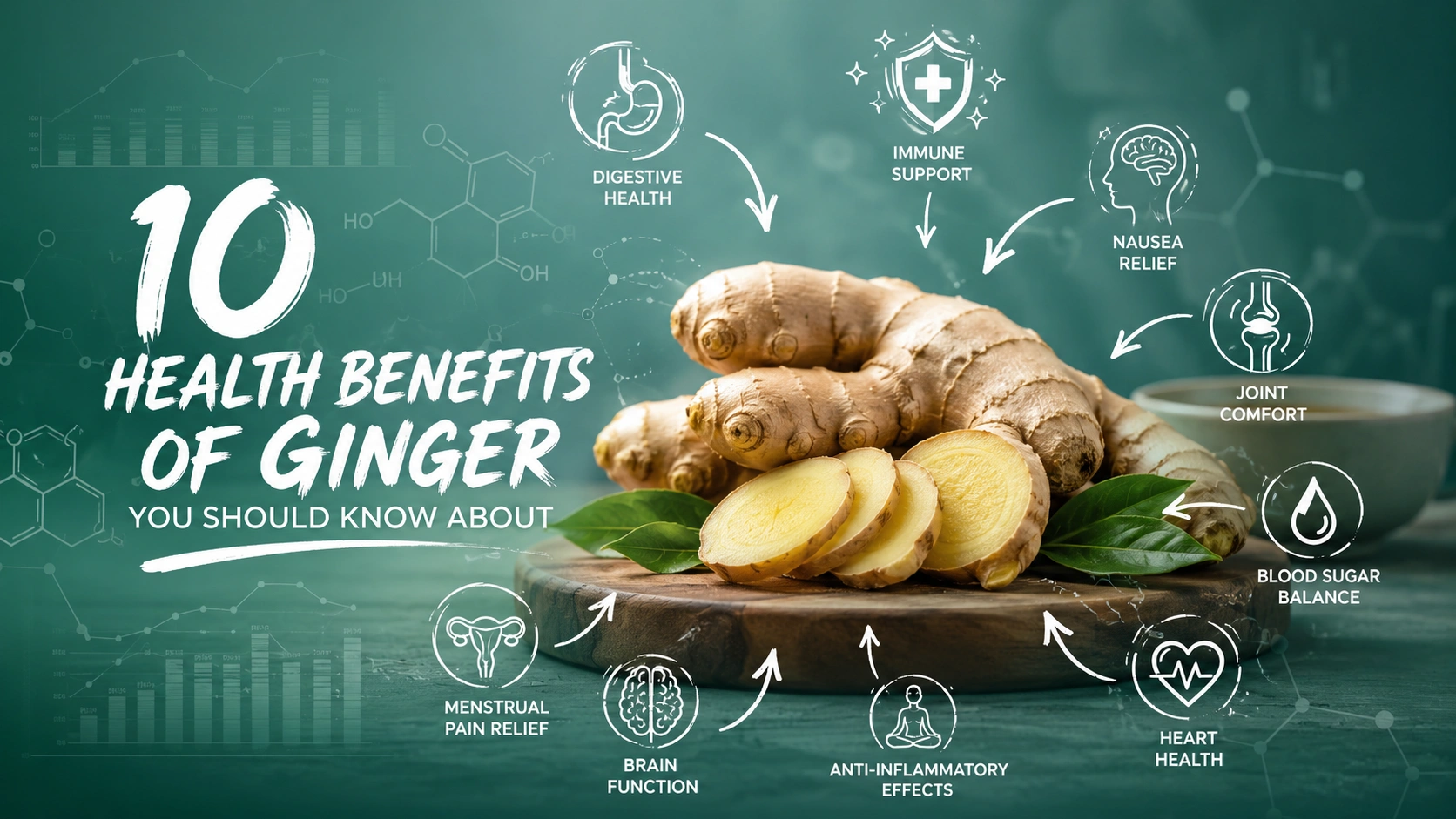
In this article, we examine 10 potential health benefits of ginger, what current research says about them, and important safety considerations to keep in mind.
What is Ginger?
Ginger (Zingiber officinale) is a flowering plant whose underground stem, known as a rhizome, is widely used as both a culinary ingredient and a traditional herbal remedy. Although it is commonly called ginger root, the edible part is technically a rhizome that grows horizontally beneath the soil.
Ginger has a distinctive warm, spicy flavor and can be consumed in several forms, including fresh, dried, powdered, pickled, or brewed as tea. It is also available in concentrated forms, such as extracts and dietary supplements.
Much of the scientific interest in ginger focuses on its naturally occurring bioactive compounds. These include gingerols, shogaols, paradols, and zingerone. Fresh ginger is particularly rich in gingerols, while drying and processing can change the composition of these compounds, including increasing the relative presence of shogaols.
These compounds have been studied for a range of biological activities, particularly their antioxidant and anti-inflammatory effects. However, the presence of bioactive compounds alone does not prove that ginger can prevent or treat every condition associated with inflammation or oxidative stress. The strength of clinical evidence varies depending on the specific health outcome being studied.
Because ginger is widely used as both a food and a complementary health product, researchers have investigated its potential effects on nausea, digestive function, menstrual pain, joint discomfort, blood sugar regulation, and several other areas of health.
What Makes Ginger Potentially Beneficial?
Ginger’s potential health effects are largely associated with its bioactive compounds, particularly gingerols and shogaols. These naturally occurring compounds contribute to ginger’s characteristic pungent flavor and have been widely studied for their biological activity.
One of the main areas of research involves inflammation and oxidative stress. Inflammation is a normal part of the body’s immune response, but persistent inflammation is associated with many chronic health conditions. Oxidative stress occurs when there is an imbalance between free radicals and the body’s ability to neutralize them.
Laboratory and clinical research suggests that compounds in ginger may influence certain inflammatory pathways and help protect cells from oxidative damage. However, the effects observed in laboratory studies do not always translate directly into meaningful health benefits in humans, so clinical evidence must be evaluated separately for each condition.
Ginger has also been studied for its effects on nausea and gastrointestinal function. Some research suggests that its compounds may influence pathways involved in nausea and vomiting and may affect gastric motility, which refers to the movement of food through the stomach and digestive tract.
Another reason ginger continues to attract scientific interest is the range of conditions in which it has been studied. Clinical research has investigated its potential effects on pregnancy-related nausea, menstrual pain, osteoarthritis symptoms, blood sugar control, and other health outcomes.
The evidence, however, is not equally strong for every proposed benefit. Some uses are supported by multiple clinical trials and systematic reviews, while others remain based primarily on small studies, laboratory findings, or traditional use.
For this reason, the health benefits discussed below should be understood in the context of the available evidence. Ginger may be a useful addition to a balanced diet and, in some situations, a complementary approach to symptom management, but it should not replace appropriate medical care.
10 Potential Health Benefits of Ginger
1. Ginger May Help Relieve Nausea and Vomiting
One of the best-studied health benefits of ginger is its potential ability to relieve certain types of nausea. Ginger has a long history of traditional use for digestive discomfort, but modern clinical research has focused particularly on nausea and vomiting associated with pregnancy.
Research suggests that ginger may help reduce the severity of pregnancy-related nausea, commonly known as morning sickness. Its effects may be linked to bioactive compounds such as gingerols and shogaols, which appear to interact with pathways involved in gastrointestinal function and the nausea response.
However, the evidence varies depending on the cause of nausea. While research is relatively supportive of ginger for pregnancy-related nausea, studies on motion sickness have produced inconsistent results.
Ginger has also been investigated as a complementary approach for chemotherapy-induced nausea and vomiting. Some studies suggest that it may provide additional benefit when used alongside conventional anti-nausea medications, but findings have not been completely consistent. Ginger should not replace prescribed antiemetic treatment for people undergoing chemotherapy.
Pregnant women and people receiving cancer treatment should speak with a qualified healthcare professional before using concentrated ginger supplements. The appropriate form and amount may depend on individual health conditions, medications, and treatment plans.
2. Ginger May Support Healthy Digestion
Ginger has traditionally been used to relieve digestive discomfort, and modern research has investigated how it may influence the movement of food through the digestive system.
One area of interest is gastric emptying, the process by which food moves from the stomach into the small intestine. Some small human studies suggest that ginger may accelerate gastric emptying and stimulate certain digestive movements. These effects could potentially help explain why some people find ginger useful for feelings of fullness or discomfort after eating.
Ginger is also commonly used for symptoms such as bloating and gas. Its traditional use as a carminative—a substance used to help relieve gas from the digestive tract—has contributed to its popularity in teas and other preparations consumed after meals.
However, evidence for specific digestive conditions remains limited. While ginger may support digestive comfort for some people, it should not be presented as a treatment for persistent indigestion, chronic bloating, stomach ulcers, or other gastrointestinal disorders.
Persistent or recurring digestive symptoms can have many causes and may require medical evaluation. Ginger can be consumed as part of a balanced diet, but it should not delay appropriate diagnosis or treatment when symptoms are severe, recurrent, or accompanied by warning signs such as unexplained weight loss, persistent vomiting, difficulty swallowing, or gastrointestinal bleeding.
3. Ginger May Help Reduce Menstrual Pain
Ginger may help reduce the intensity of menstrual pain, also known as dysmenorrhea. Several clinical trials and systematic reviews have examined the effects of oral ginger on primary dysmenorrhea, which refers to recurring menstrual pain that is not caused by another underlying medical condition.
Research suggests that ginger may reduce menstrual pain intensity compared with a placebo. Its potential pain-relieving effects may be related to its influence on inflammatory processes involved in menstrual cramping, although the exact mechanisms and clinical significance continue to be studied.
Some studies have compared ginger with nonsteroidal anti-inflammatory drugs (NSAIDs) used for menstrual pain. While certain findings suggest comparable reductions in pain intensity, the available evidence is not strong enough to conclude that ginger should routinely replace standard medical treatments.
The existing research also has important limitations. Studies have used different ginger preparations, doses, treatment periods, and methods of measuring pain. Some trials have also involved relatively small numbers of participants. For these reasons, larger and better-designed studies are still needed to establish the most effective form, dose, and duration of ginger use for menstrual pain.
For people with mild menstrual cramps, ginger may be considered as a complementary dietary option. However, severe, worsening, or unusually persistent menstrual pain should be medically evaluated, as it may be associated with conditions such as endometriosis, adenomyosis, uterine fibroids, or other gynecological disorders.
4. Ginger May Help Reduce Osteoarthritis Pain and Stiffness
Ginger has been studied for its potential role in managing symptoms of osteoarthritis, a degenerative joint condition that commonly causes pain, stiffness, and reduced mobility.
Some clinical studies and systematic reviews suggest that oral ginger preparations may provide modest improvements in pain and physical function among people with osteoarthritis, particularly osteoarthritis of the knee. These potential effects are often attributed to ginger’s bioactive compounds and their influence on inflammatory pathways associated with pain and joint discomfort.
However, ginger should not be considered a cure for osteoarthritis or a replacement for established treatments. Osteoarthritis management may involve physical activity, weight management when appropriate, physical therapy, pain-relieving medications, and other interventions based on the severity of symptoms and individual medical needs.
The available research on ginger also has limitations. Studies have used different types of ginger extracts, doses, and treatment durations, making it difficult to determine a single standardized approach. Some participants in clinical studies have also reported gastrointestinal side effects.
For people with osteoarthritis, ginger may be considered as a complementary option alongside an appropriate treatment plan. Anyone considering concentrated ginger supplements—particularly people who take medications regularly or are preparing for surgery—should discuss their use with a healthcare professional.
5. Ginger May Support Healthy Blood Sugar Levels
Ginger has been studied for its potential effects on blood sugar regulation, particularly among people with type 2 diabetes. Some clinical trials and systematic reviews suggest that ginger supplementation may improve certain markers of glycemic control, including fasting blood glucose and hemoglobin A1c (HbA1c).
Researchers have proposed several possible mechanisms for these effects. Compounds in ginger may influence glucose metabolism, insulin sensitivity, and cellular pathways involved in blood sugar regulation. However, these mechanisms are still being investigated, and findings from laboratory research cannot automatically be translated into clinical benefits.
The results of human studies are also not entirely consistent. Clinical trials have used different ginger preparations, daily amounts, intervention periods, and participant populations. As a result, more high-quality research is needed to determine which individuals are most likely to benefit and whether the effects are clinically meaningful over the long term.
People with diabetes should not use ginger as a replacement for prescribed medication, dietary management, physical activity, or regular blood glucose monitoring. Concentrated ginger supplements may also require additional caution when used alongside glucose-lowering medications because of the possibility of additive effects on blood sugar levels.
For most people, using ginger in normal culinary amounts can be a flavorful way to add variety to a balanced diet. Anyone with diabetes who is considering regular use of concentrated ginger supplements should discuss the decision with a qualified healthcare professional.
6. Ginger May Have Anti-Inflammatory and Antioxidant Effects
Ginger contains several bioactive compounds that have been studied for their anti-inflammatory and antioxidant properties. Among the most widely researched are gingerols and shogaols, which may influence biological pathways involved in inflammation and oxidative stress.
Inflammation is an essential part of the body’s response to injury and infection. However, persistent low-grade inflammation is associated with a range of chronic health conditions. Oxidative stress, meanwhile, occurs when the production of reactive molecules exceeds the body’s ability to neutralize them effectively.
Laboratory research suggests that compounds found in ginger can interact with certain inflammatory signaling pathways and demonstrate antioxidant activity. Human studies have also examined whether ginger supplementation affects biomarkers associated with inflammation and oxidative stress, although findings vary across populations and study designs.
These properties may help explain some of the more specific effects investigated in clinical research, including ginger’s potential role in menstrual pain and osteoarthritis symptoms. However, having anti-inflammatory or antioxidant activity does not mean that ginger can prevent or treat every disease associated with inflammation or oxidative damage.
The clinical effects of ginger depend on several factors, including the health condition being studied, the preparation used, the amount consumed, and the duration of use. More research is needed to determine how changes in laboratory markers translate into meaningful long-term health outcomes.
Ginger can be included as part of a varied, nutrient-dense diet, but it should not be viewed as a substitute for medical treatment or as a single solution for chronic inflammation.
7. Ginger May Support Certain Heart Health Markers
Researchers have investigated whether ginger may influence several markers associated with cardiovascular health, including blood pressure and blood lipid levels.
Some clinical studies and systematic reviews suggest that ginger supplementation may produce modest improvements in certain lipid markers, such as triglycerides, total cholesterol, and low-density lipoprotein (LDL) cholesterol. Research has also explored possible effects on blood pressure, although results vary depending on the study population, ginger preparation, dose, and duration of supplementation.
Several mechanisms have been proposed to explain these findings. Ginger’s bioactive compounds may influence lipid metabolism, inflammatory pathways, oxidative stress, and processes involved in vascular function. However, these proposed mechanisms are still being studied, and improvements in individual biomarkers do not necessarily demonstrate that ginger prevents heart attacks, strokes, or other cardiovascular events.
Heart health is influenced by many interconnected factors, including diet quality, physical activity, smoking status, sleep, blood pressure, blood sugar control, cholesterol levels, genetics, and access to appropriate medical care. Ginger should therefore be viewed as a possible complementary dietary component rather than a primary strategy for preventing or treating cardiovascular disease.
People taking medications for high blood pressure, diabetes, or other cardiovascular conditions should consult a healthcare professional before using concentrated ginger supplements regularly. Ginger supplements should not be used to replace prescribed medications or established cardiovascular risk-reduction strategies.
8. Ginger May Help With Some Migraine Symptoms
Ginger has been investigated as a possible complementary option for people experiencing migraine attacks. However, research in this area remains limited, and ginger should not be considered an established treatment for migraine or other types of headache.
Some small clinical studies have explored whether ginger may help reduce migraine-related pain or improve symptoms when used alongside standard treatment. Researchers have suggested that ginger’s potential effects may be related to pathways involved in inflammation, pain signaling, and nausea.
The potential effect on nausea may be particularly relevant because nausea and vomiting are common symptoms during migraine attacks. Since ginger has stronger evidence for certain forms of nausea than it does for headache relief itself, some people may find it more useful for associated digestive symptoms than for directly reducing migraine pain.
However, headaches can have many different causes, and treatments that help one type may not be appropriate for another. Tension-type headaches, migraine, medication-overuse headaches, and headaches caused by underlying medical conditions require different approaches to diagnosis and management.
People who experience frequent, severe, or changing headache patterns should seek medical evaluation rather than relying on ginger or other home remedies alone. Immediate medical attention may be necessary for a sudden, extremely severe headache or a headache accompanied by symptoms such as confusion, weakness, difficulty speaking, loss of consciousness, or other new neurological changes.
More large-scale clinical trials are needed before clear conclusions can be made about ginger’s effectiveness, optimal preparation, or appropriate use for migraine management.
9. Ginger May Help Ease Pregnancy-Related Morning Sickness
Ginger is one of the most widely studied complementary approaches for nausea and vomiting during pregnancy. Research suggests that it may help reduce the severity of mild to moderate pregnancy-related nausea, commonly referred to as morning sickness.
Despite its name, morning sickness can occur at any time of the day or night. Symptoms vary considerably between individuals, ranging from occasional nausea to frequent vomiting that can interfere with eating, drinking, and normal daily activities.
Clinical trials and systematic reviews have generally found that ginger may provide some relief from pregnancy-related nausea. However, studies have used different forms of ginger, including capsules, powders, syrups, and other preparations, which makes it difficult to establish a single approach that is appropriate for everyone.
It is also important to distinguish typical pregnancy-related nausea from hyperemesis gravidarum, a severe condition characterized by persistent nausea and vomiting that may lead to dehydration, weight loss, and electrolyte imbalances. Ginger should not be relied upon as the sole treatment for severe or persistent vomiting during pregnancy.
Pregnant women should discuss the use of ginger supplements with a qualified healthcare professional, particularly before taking concentrated products or combining ginger with other supplements or medications. Individual medical history, the severity of symptoms, and other aspects of pregnancy care may affect what is appropriate.
For some pregnant women, ginger-containing foods or beverages may be a practical dietary option for managing mild nausea. However, tolerance varies, and professional medical advice is appropriate when symptoms are persistent, severe, or make it difficult to maintain adequate food and fluid intake.
10. Ginger Contains Compounds Being Studied for Anticancer Effects
Ginger contains several bioactive compounds that researchers have investigated for their potential effects on cancer-related biological processes. These include gingerols, shogaols, and other naturally occurring compounds found in fresh and processed ginger.
Laboratory studies have found that certain ginger compounds can influence processes involved in cancer cell growth, proliferation, and programmed cell death. Researchers have also investigated their effects on inflammatory and cellular signaling pathways that may be involved in the development and progression of certain cancers.
These findings are scientifically interesting, but they require careful interpretation. Much of the research demonstrating anticancer activity has been conducted in isolated cells or animal models. Results from these types of studies cannot be assumed to produce the same effects when people consume ginger as a food, tea, extract, or supplement.
Limited human research has examined whether ginger supplementation can influence biomarkers associated with colorectal cancer risk and inflammation. However, the available evidence is not sufficient to conclude that ginger prevents colorectal cancer or any other type of cancer.
It is also important to distinguish cancer prevention research from the use of ginger for symptom management during cancer treatment. Ginger has been studied as a complementary approach for chemotherapy-related nausea and vomiting, but results have been mixed. It should not replace prescribed anti-nausea medications or any form of cancer treatment.
A healthy dietary pattern that includes a variety of plant foods can form part of an overall approach to health, and ginger can certainly be included as a culinary ingredient. However, no single food or spice should be presented as a proven method for preventing or treating cancer.
People undergoing cancer treatment should discuss ginger supplements and other concentrated herbal products with their healthcare team before using them. Supplements may not be appropriate for every patient, and potential interactions should be considered alongside the individual treatment plan.
How to Add Ginger to Your Diet
Ginger is a versatile ingredient that can be used in both food and beverages. Its warm, slightly spicy flavor works well in savory dishes, baked foods, smoothies, and hot drinks.
Fresh ginger can be peeled, sliced, grated, or finely chopped before being added to meals. Ground ginger is more concentrated in flavor and is commonly used in baking and spice blends. Pickled ginger is another popular preparation, particularly as an accompaniment to certain dishes.
Some practical ways to include ginger in your diet include:
- Grating fresh ginger into soups, curries, stir-fries, or marinades.
- Steeping sliced fresh ginger in hot water to make ginger tea.
- Adding a small amount of fresh ginger to smoothies.
- Using ground ginger in oatmeal, baked goods, or homemade spice blends.
- Combining ginger with ingredients such as garlic, lemon, or herbs when preparing sauces and dressings.
- Using pickled ginger as a condiment or accompaniment to appropriate meals.
Fresh ginger and dried ginger do not have identical chemical profiles. Processing and drying can change the relative concentrations of gingerols, shogaols, and other compounds. However, this does not necessarily mean that one form is universally healthier or more effective than another.
For most healthy adults, culinary use of ginger can be a simple way to add flavor and variety to meals. Concentrated extracts and supplements are different from normal food use because they may provide substantially higher amounts of ginger compounds.
People considering ginger supplements for a specific health concern should discuss their use with a qualified healthcare professional, particularly if they have an existing medical condition, take prescription medications, are pregnant, or are preparing for surgery.
Possible Side Effects and Safety Considerations
Ginger is widely consumed as a food and spice, and many people tolerate it well in normal culinary amounts. However, concentrated ginger products and supplements may cause side effects in some individuals.
Possible side effects of oral ginger use include:
- Abdominal discomfort
- Heartburn
- Diarrhea
- Mouth or throat irritation
The likelihood and severity of side effects may depend on the amount consumed, the form of ginger used, and individual sensitivity.
People who take prescription medications should be cautious about using concentrated ginger supplements without professional guidance. Herbal products can interact with medications or affect health conditions in ways that may not be obvious from their use as ordinary foods.
Particular caution may be appropriate for people taking medications that affect blood clotting, blood sugar, or blood pressure. This does not mean that everyone using these medications must completely avoid culinary ginger, but concentrated supplements should be discussed with a qualified healthcare professional.
Pregnant women should also seek professional guidance before using ginger supplements, especially concentrated products or amounts beyond normal food use. Although ginger has been studied for pregnancy-related nausea, individual circumstances and medical histories vary.
People preparing for surgery should tell their healthcare team about all supplements and herbal products they use. This information can help clinicians assess possible interactions and determine whether any products should be temporarily discontinued.
It is also important to remember that dietary supplements can differ in concentration, formulation, and quality. A cup of ginger tea, fresh ginger used in cooking, and a concentrated ginger extract are not equivalent forms of exposure.
For most people, using ginger as a culinary ingredient is a practical way to enjoy its flavor. Anyone considering concentrated ginger products for a specific health condition should seek individualized advice from an appropriately qualified healthcare professional.
Frequently Asked Questions About Ginger
Is It Safe to Eat Ginger Every Day?
For many healthy adults, consuming ginger regularly in normal culinary amounts is generally well tolerated. Ginger can be added to meals, used as a spice, or prepared as a beverage such as ginger tea.
However, tolerance varies between individuals. Some people may experience heartburn, abdominal discomfort, diarrhea, or irritation of the mouth and throat, particularly when consuming larger amounts or concentrated products.
Daily use of ginger supplements should be considered differently from eating ginger as part of a normal diet. People who take prescription medications, have an existing medical condition, are pregnant, or are preparing for surgery should seek professional advice before regularly using concentrated ginger supplements.
What Is the Healthiest Way to Consume Ginger?
There is no single healthiest way to consume ginger. Fresh ginger, dried ginger, ground ginger, and ginger tea can all be included in a balanced diet.
The best form depends largely on personal preference and how ginger is being used. Fresh ginger works well in soups, stir-fries, marinades, and beverages, while ground ginger is convenient for baking and spice blends.
Processing can change the relative concentrations of ginger’s bioactive compounds. Fresh ginger is particularly associated with gingerols, while drying and heating can alter the chemical profile and increase the relative presence of compounds such as shogaols.
These differences do not establish that one form is universally superior. For everyday dietary use, choosing a minimally processed preparation without excessive added sugar may be a practical approach.
Is Fresh Ginger Better Than Ground Ginger?
Fresh and ground ginger have different flavors, culinary uses, and chemical profiles, but one is not necessarily better than the other for every purpose.
Fresh ginger has a sharp, aromatic flavor and is commonly used in savory dishes, teas, and fresh preparations. Ground ginger has a warmer and more concentrated flavor profile and is frequently used in baking, spice mixtures, and recipes where fresh ginger would not be practical.
The scientific literature on ginger also uses a variety of preparations, including powders, standardized extracts, capsules, and fresh ginger. Therefore, results from a study using one specific preparation should not automatically be applied to every other form of ginger.
Can Ginger Tea Provide the Same Benefits as Ginger Supplements?
Ginger tea and ginger supplements should not be considered equivalent. The concentration and amount of bioactive compounds can differ substantially depending on how the tea is prepared and how the supplement is formulated.
Many clinical studies investigating specific health outcomes have used measured amounts of ginger powder or standardized preparations rather than ordinary ginger tea. Therefore, drinking ginger tea cannot be assumed to produce the same effects reported in every clinical trial.
Ginger tea can still be an enjoyable way to include ginger in the diet, but it should not be presented as a guaranteed treatment for a medical condition.
Can Ginger Interact With Medications?
Ginger supplements may interact with certain medications or influence physiological processes that are relevant to medical treatment. Potential concerns are particularly important for people taking medications that affect blood clotting, blood sugar, or blood pressure.
The level of concern may depend on the amount and form of ginger consumed. Using ginger as a seasoning in food is different from taking a concentrated extract or high-dose supplement regularly.
Anyone taking prescription medication should discuss regular use of concentrated ginger supplements with a physician, pharmacist, or other appropriately qualified healthcare professional. Prescribed medication should not be stopped or adjusted based solely on information about ginger or other dietary supplements.
The Bottom Line
Ginger is a versatile spice with a long history of culinary and traditional use. Modern research suggests that some of its potential health benefits deserve scientific attention, although the strength of evidence varies considerably between different uses.
Among the most studied applications of ginger are pregnancy-related nausea, menstrual pain, and symptoms associated with osteoarthritis. Research has also explored its potential effects on digestion, blood sugar regulation, cardiovascular risk markers, inflammation, oxidative stress, and migraine-related symptoms.
However, ginger should not be treated as a cure-all. Laboratory findings about antioxidant, anti-inflammatory, or anticancer activity do not automatically demonstrate that eating ginger can prevent or treat serious diseases. Clinical evidence must be considered separately for each health outcome.
For most healthy adults, using fresh or ground ginger as part of a varied and balanced diet is a practical way to enjoy its flavor and nutritional value. Ginger tea can also be an enjoyable beverage, although it should not be assumed to provide the same amount of bioactive compounds used in clinical studies of concentrated preparations.
People who are pregnant, take prescription medications, have chronic health conditions, are receiving cancer treatment, or are preparing for surgery should seek professional guidance before using concentrated ginger supplements regularly.
Overall, ginger can be a valuable addition to a healthy dietary pattern, but its benefits should be understood in the context of the available evidence. It is best viewed as a food with potentially useful biological properties and selected evidence-supported applications—not as a replacement for appropriate medical care.
References
- National Center for Complementary and Integrative Health. Ginger: Usefulness and Safety. National Institutes of Health.
- Viljoen E, Visser J, Koen N, Musekiwa A. A systematic review and meta-analysis of the effect and safety of ginger in the treatment of pregnancy-associated nausea and vomiting. Nutrition Journal. 2014;13:20.
- Crichton M, Marshall S, Marx W, et al. Orally consumed ginger and human health: An umbrella review. The American Journal of Clinical Nutrition. 2022;115(6):1511–1527.
- Anh NH, Kim SJ, Long NP, et al. Ginger on human health: A comprehensive systematic review of 109 randomized controlled trials. Nutrients. 2020;12(1):157.
- Daily JW, Zhang X, Kim DS, Park S. Efficacy of ginger for alleviating the symptoms of primary dysmenorrhea: A systematic review and meta-analysis of randomized clinical trials. Pain Medicine. 2015;16(12):2243–2255.
- Li H, Liu Y, Luo D, et al. Ginger for health care: An overview of systematic reviews. Complementary Therapies in Medicine. 2019;45:114–123.
- Negi R, Sharma SK, Gaur R, et al. Efficacy of ginger in the treatment of primary dysmenorrhea: A systematic review and meta-analysis. Cureus. 2021;13(3):e13743.
- National Center for Complementary and Integrative Health. Cancer and Complementary Health Approaches: What You Need to Know. National Institutes of Health.
- About the Author
- Latest Posts

Salwa Alifah Yusrina is the Editor-in-Chief at Medslat.com. She is a professional Nutritionist with over 7 years of clinical and research experience. She holds a Master’s degree in Nutrition Science from Hasanuddin University. At Medslat.com, she oversees the editorial direction and ensures that all health and nutrition content adheres to the highest standards of accuracy and evidence-based science.




I want to watch football