
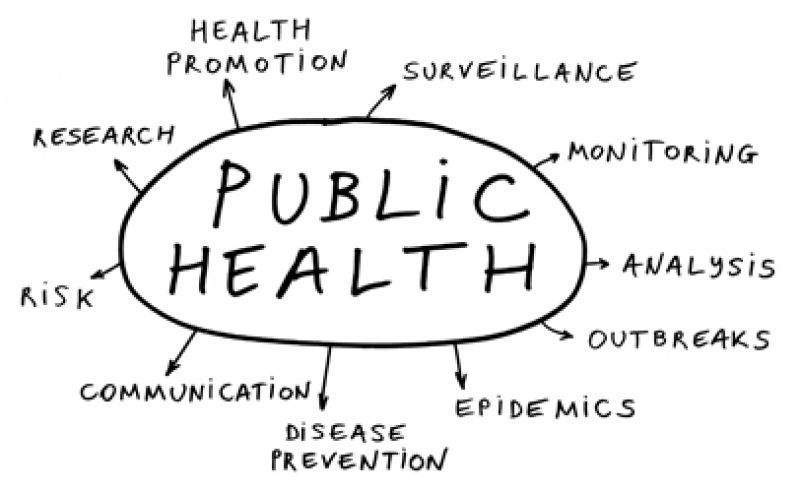
Health is shaped by much more than medical treatment, genetics, or individual lifestyle choices. The conditions surrounding everyday life—including income, housing, education, employment, access to healthcare, transportation, and social relationships—can influence health risks and opportunities throughout a person’s life.
Public health researchers refer to many of these conditions as social determinants of health. The World Health Organization describes them as the non-medical factors and broader systems that influence health outcomes, including the conditions in which people are born, grow, work, live, and age.
These influences matter at the population level, but they can also become highly visible during serious illnesses. Cancer care offers a clear example: two patients with medically similar diseases may face very different practical circumstances when trying to access, complete, and recover from treatment.
Research involving acute myeloid leukemia (AML) illustrates this relationship. However, the evidence requires careful interpretation. Social and economic factors can be associated with survival without being direct biological causes of cancer progression.
What Are Social Determinants of Health?
Social determinants of health are the conditions outside the traditional boundaries of clinical medicine that influence health risks, healthcare access, quality of life, and health outcomes.
The Healthy People 2030 framework groups social determinants into five broad domains:
- economic stability;
- education access and quality;
- healthcare access and quality;
- neighborhood and built environment; and
- social and community context.
These domains often interact. A person experiencing financial insecurity, for example, may also have unstable housing, limited transportation, difficulty taking time away from work, and restricted access to healthcare. The resulting health disadvantage may reflect several overlapping barriers rather than a single isolated factor.
This is why public health analysis looks beyond individual behavior. Personal decisions matter, but those decisions are made within social, economic, and environmental conditions that can either expand or restrict people’s options.

How Can Social and Economic Conditions Affect Health?
Social determinants can influence health through multiple pathways. The effects are not identical for every person, and the presence of a disadvantage does not determine an individual’s outcome. Instead, these conditions can alter risks, opportunities, and barriers over time.
Access to Healthcare
Insurance coverage, geographic location, transportation, appointment availability, and the affordability of care can affect whether someone receives timely diagnosis and appropriate treatment.
For diseases requiring complex or prolonged care, barriers can accumulate. Patients may need frequent clinic visits, laboratory testing, hospitalization, specialist consultations, prescription medicines, or extended stays near a treatment center.
A person who cannot reliably reach appointments or manage the indirect costs of treatment may experience challenges that are not captured by a medical diagnosis alone.
Financial Stability
Serious illness can create expenses beyond medical bills. Transportation, temporary lodging, food, childcare, and loss of income can all become part of the economic burden of treatment.
The American Cancer Society notes that cancer-related costs can extend to transportation, lodging, food, and other practical expenses.
Financial strain can therefore affect how easily a patient navigates care, even when treatment itself is available.
Housing and Neighborhood Conditions
Housing quality and neighborhood conditions can influence exposure to environmental hazards, opportunities for physical activity, access to nutritious food, transportation options, safety, and proximity to healthcare services.
These factors may operate across the life course. Their effects can begin long before a person develops a particular disease and may continue to influence the ability to manage illness after diagnosis.
Education and Health Literacy
Education can affect employment opportunities, income, access to resources, and the ability to navigate complex institutions. Health literacy—the ability to find, understand, and use health information—can also affect communication with healthcare professionals and participation in medical decisions.
Health literacy should not be treated simply as an individual deficiency. Healthcare systems also have a responsibility to communicate clearly and make information accessible.
Social Relationships and Community Support
Social support is one component of the broader social determinants framework. Family members, friends, caregivers, neighbors, and community organizations may provide emotional support as well as practical assistance.
For someone undergoing intensive treatment, practical support might include transportation, meal preparation, childcare, help organizing appointments, communication with the healthcare team, or assistance with daily responsibilities.
Social connection should not be presented as a substitute for medical care. Rather, it can be one part of the environment in which patients navigate illness and treatment.
What Did the AML Study Find?
The original article was based largely on a 2015 observational study examining nonbiological factors and survival among younger adults with acute myeloid leukemia.
The study analyzed 5,541 people aged 19 to 64 who were diagnosed with AML between 2007 and 2011 and recorded in the U.S. Surveillance, Epidemiology, and End Results program. Researchers evaluated marital status, insurance status, county-level income, and education alongside biological and demographic factors.
After statistical adjustment, the researchers found that a higher risk of death was independently associated with several factors, including being uninsured, having Medicaid coverage, being single or divorced, and living in counties within the lower three quintiles of median household income. The associations were observed for both early and later mortality, and the researchers also reported associations among patients known to have received chemotherapy.
These findings support an important public health conclusion: outcomes in AML may be associated not only with disease characteristics but also with the circumstances in which patients access and navigate care.
However, the study does not prove that being unmarried, having a particular type of insurance, or living in a lower-income area directly causes death from AML. It was an observational analysis, and socioeconomic indicators can represent complex underlying differences in access, resources, care settings, transportation, caregiving, and other factors.
Why Social Conditions May Matter in AML Care
Acute myeloid leukemia is a rapidly progressing blood and bone marrow cancer. Treatment varies according to factors such as AML subtype, molecular and genetic characteristics, age, overall health, previous treatment, and treatment goals.
Current treatment approaches can include chemotherapy, targeted therapy, stem cell transplantation in selected patients, and supportive care.
The practical demands of care can be substantial. Depending on the patient’s treatment plan and clinical condition, AML care may involve hospitalization, repeated testing, management of treatment complications, transfusions, infection prevention and treatment, and close monitoring.
This provides several plausible pathways through which social and economic conditions could influence outcomes.
A patient may have difficulty reaching a specialized treatment center. A caregiver may be unable to leave work for extended periods. Transportation and lodging may become expensive. Insurance status may influence access to particular facilities or services. Communication barriers may make an already complicated treatment process harder to navigate.
These mechanisms are plausible and consistent with broader research on healthcare disparities, but the relative contribution of each pathway can vary. Researchers continue to study how specific social factors interact with disease biology, healthcare access, treatment delivery, and supportive care.
Social Support and Socioeconomic Status Are Not the Same Thing
One weakness in many discussions of this topic is the tendency to treat all non-medical factors as “social support.”
The concepts overlap, but they are not interchangeable.
Social support generally refers to emotional, informational, and practical assistance available through relationships and social networks.
Socioeconomic conditions include factors such as income, employment, education, insurance coverage, and material resources.
Structural determinants refer to broader systems and policies that shape the distribution of opportunities and resources across populations.
A patient can have strong family relationships while still experiencing financial barriers. Another patient may have adequate financial resources but limited emotional or caregiving support.
Effective public health and clinical interventions need to identify the specific barrier rather than assuming that one form of support can compensate for every other disadvantage.
Health Disparities Reflect More Than Personal Choices
The original article correctly recognized that health disparities cannot be explained solely through personal behavior. However, claims assigning a precise universal percentage to behavioral causes should be avoided unless they refer to a clearly defined population, outcome, and methodology.
Health disparities emerge from interacting influences. These may include access to education and employment, income and wealth, housing, environmental exposures, healthcare access and quality, discrimination, transportation, neighborhood conditions, and public policy.
The WHO’s 2025 World Report on Social Determinants of Health Equity emphasizes that avoidable health gaps are linked to non-medical conditions and broader structural forces that shape people’s opportunities for health and well-being.
This perspective does not mean that health behavior is irrelevant. Smoking, alcohol consumption, physical inactivity, diet, and other behaviors can have substantial effects on health. The public health question is broader: what conditions shape exposure, opportunity, stress, access to resources, and the ability to make and sustain healthier choices?
What Meaningful Support for Patients Can Look Like
Support for people facing cancer or other serious illnesses needs to be specific to the person’s circumstances. Encouraging someone to “stay positive” is not a substitute for identifying practical barriers.
Depending on the situation, meaningful support may include:
- reliable transportation to appointments;
- assistance with meals or household responsibilities;
- childcare or dependent-care support;
- help organizing appointments and medical information;
- access to a patient navigator or oncology social worker;
- financial counseling and assistance programs;
- psychological or peer support;
- caregiver support and respite resources; and
- help communicating questions and concerns to the healthcare team.
Cancer support organizations may provide or help patients locate transportation, lodging, financial assistance, caregiver resources, and other services. Availability and eligibility vary by program and location.
Patients experiencing financial, transportation, housing, food-access, or caregiving difficulties should consider telling their healthcare team. Depending on the healthcare system, assistance may be available through social workers, financial counselors, patient navigators, community organizations, or disease-specific support programs.
What Healthcare Systems Can Do
Addressing social determinants of health requires more than asking patients whether they have support. Screening is useful only when healthcare organizations have a realistic process for responding to identified needs.
Potential strategies include integrating social-needs assessment into care, improving patient navigation, connecting patients with financial counseling, coordinating transportation and lodging resources, using clear communication practices, and strengthening referral pathways to community services.
Healthcare institutions can also examine whether differences in access, treatment initiation, specialist referral, and continuity of care are occurring across patient groups.
The goal is not to reduce every health outcome to socioeconomic status. Disease biology remains critical, particularly in a heterogeneous disease such as AML. The goal is to recognize potentially modifiable barriers that exist alongside biological risk factors.
What Public Health Policy Can Address
At the population level, social determinants require interventions beyond the clinic.
Policies affecting housing stability, education, employment conditions, income security, transportation, environmental safety, food access, and healthcare coverage can all influence the conditions in which health is produced and maintained.
The WHO’s current health-equity framework emphasizes addressing these upstream conditions rather than relying exclusively on interventions after illness has already developed.
For cancer and other serious diseases, health-equity strategies can also focus on reducing delays in diagnosis, improving access to specialist care, minimizing financial toxicity, supporting caregivers, and ensuring that practical barriers do not unnecessarily interfere with treatment.
The Bottom Line
Medical care is essential, but health is not created in the clinic alone.
Income, insurance coverage, housing, transportation, education, neighborhood conditions, discrimination, healthcare access, and social relationships can influence the risks people face and the resources available when illness occurs.
The 2015 AML study remains a useful example because it found independent associations between survival and several nonbiological factors in younger adults with the disease. It should not, however, be interpreted as proof that social support alone improves AML survival or as evidence that the findings automatically apply to every chronic illness.
A more accurate conclusion is that health outcomes emerge from an interaction between biology, medical care, behavior, social conditions, and broader systems. Improving health therefore requires excellent clinical care alongside serious attention to the barriers that affect whether people can access and benefit from that care.
- About the Author
- Latest Posts

Salwa Alifah Yusrina is the Editor-in-Chief at Medslat.com. She is a professional Nutritionist with over 7 years of clinical and research experience. She holds a Master’s degree in Nutrition Science from Hasanuddin University. At Medslat.com, she oversees the editorial direction and ensures that all health and nutrition content adheres to the highest standards of accuracy and evidence-based science.