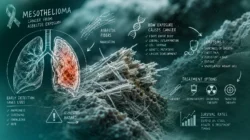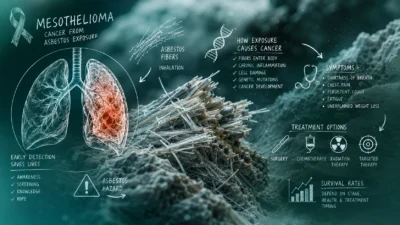
Mesothelioma and lung cancer can cause similar symptoms, affect structures within the chest, and share asbestos exposure as a risk factor. However, they are not the same disease.
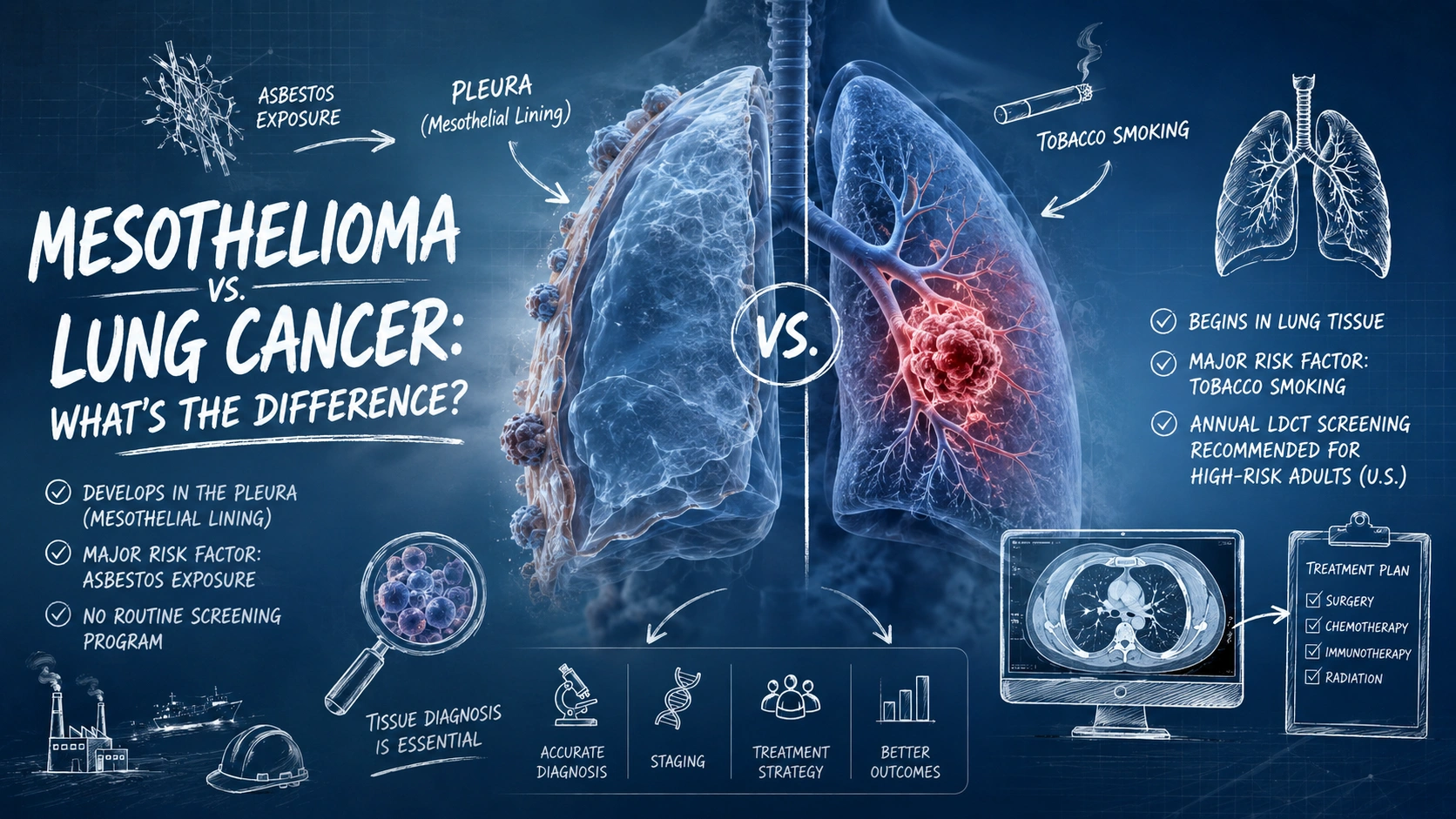
The fundamental difference is where each cancer begins. Lung cancer starts in cells of the lung, while pleural mesothelioma develops in the pleura, the thin tissue lining around the lungs and inside the chest.
That distinction affects how the diseases are classified, diagnosed, staged, and treated. Smoking also plays a very different role: it is the leading risk factor for lung cancer, whereas asbestos exposure is the major established risk factor for mesothelioma.
Here is a quick comparison:
Feature Mesothelioma Lung Cancer Where it begins Mesothelial lining, commonly the pleura Cells within lung tissue Major risk factor Asbestos exposure Tobacco smoking Asbestos-related Yes Yes Smoking as a direct risk factor Not established as a cause of mesothelioma Major risk factor Main disease classification By anatomical site and histology Primarily NSCLC and SCLC Screening No routine population screening program Annual LDCT recommended for certain high-risk adults in the U.S. Treatment approach Depends on site, histology, extent, and resectability Depends on type, stage, biomarkers, and other clinical factors
Understanding these differences matters because a tumor near the lung cannot be accurately classified based on symptoms or location alone. Tissue examination and other diagnostic procedures are needed to determine the exact type of cancer.
Is Mesothelioma a Type of Lung Cancer?
No. Mesothelioma is not a type of lung cancer.
Pleural mesothelioma develops in the pleura, the membrane surrounding the lungs and lining the inside of the chest cavity. Lung cancer begins in cells within the lung itself.
The confusion is understandable. Pleural mesothelioma is the most common form of mesothelioma, and its location means that the disease can affect breathing, cause chest pain, and produce other symptoms associated with diseases of the chest.
The term “mesothelioma lung cancer” is sometimes used informally, but it is medically inaccurate. A more precise term is malignant pleural mesothelioma when referring specifically to mesothelioma arising in the pleura.
Mesothelioma can also develop outside the chest. Peritoneal mesothelioma arises in the lining of the abdominal cavity, while much rarer forms can occur in the membrane surrounding the heart or the tissue surrounding a testicle.
Lung cancer, by contrast, begins in lung tissue and is broadly divided into non-small cell lung cancer and small cell lung cancer. These categories have different biological characteristics and treatment pathways.
Where Do Mesothelioma and Lung Cancer Begin?
The location where a cancer begins is one of the most important differences between these diseases.
Mesothelioma Begins in Mesothelial Tissue
The mesothelium is a thin layer of tissue that lines certain body cavities and covers internal organs.
Pleural mesothelioma begins in the pleura. As the cancer progresses, it can spread across pleural surfaces and involve nearby structures within the chest.
This pattern differs from a typical primary lung tumor, which begins within lung tissue.
Lung Cancer Begins in the Lung
Lung cancer begins when cells in the lung undergo malignant changes and grow uncontrollably.
The two broad categories are:
- Non-small cell lung cancer (NSCLC), which includes several subtypes such as adenocarcinoma and squamous cell carcinoma.
- Small cell lung cancer (SCLC), which generally has different biological behavior and treatment strategies.
The distinction between NSCLC and SCLC is clinically important because treatment decisions differ significantly between them.
Can Asbestos Cause Both Mesothelioma and Lung Cancer?
Yes. Asbestos exposure can cause both mesothelioma and lung cancer.
Asbestos is a group of naturally occurring fibrous minerals that were historically used in construction materials, insulation, shipbuilding, manufacturing, and other industrial applications.
When asbestos-containing materials are disturbed, microscopic fibers can become airborne and may be inhaled. Exposure can contribute to several serious diseases, including:
- mesothelioma;
- lung cancer;
- asbestosis; and
- other asbestos-related conditions.
A person with occupational asbestos exposure should not assume that a later chest cancer is automatically mesothelioma. Asbestos exposure is relevant to the risk of both diseases, and accurate diagnosis requires appropriate medical evaluation.
Smoking, Asbestos, and Cancer Risk
Smoking is one of the clearest differences between mesothelioma and lung cancer risk.
Smoking and Mesothelioma
Smoking is not considered an established cause of mesothelioma.
A person who has smoked can still develop mesothelioma, but smoking history does not replace the importance of evaluating occupational, household, and environmental asbestos exposure.
Smoking and Lung Cancer
Cigarette smoking is the strongest risk factor for lung cancer.
Lung cancer can also occur in people who have never smoked. Other risk factors can include secondhand smoke, radon, occupational exposures, air pollution, and exposure to carcinogens such as asbestos.
For people exposed to asbestos, smoking is especially important because the combination of tobacco smoke and asbestos exposure substantially increases lung cancer risk.
This interaction does not mean that smoking causes mesothelioma. It illustrates why the same exposure history can have different implications for different diseases.
Do Mesothelioma and Lung Cancer Have the Same Symptoms?
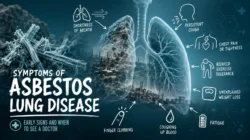
Mesothelioma and lung cancer can cause overlapping symptoms, which is one reason symptoms alone cannot distinguish them.
Possible shared symptoms include:
- shortness of breath;
- persistent cough;
- chest pain or discomfort;
- fatigue;
- reduced appetite; and
- unexplained weight loss.
However, the pattern and cause of symptoms can differ.
Symptoms Associated With Pleural Mesothelioma
Pleural mesothelioma may cause symptoms related to tumor growth along the pleura or fluid accumulation around the lung.
Possible symptoms include:
- progressive shortness of breath;
- chest or rib pain;
- persistent cough;
- fatigue;
- reduced appetite; and
- unexplained weight loss.
Pleural effusion, an abnormal accumulation of fluid in the space around the lung, can contribute to breathlessness and chest discomfort.
Symptoms Associated With Lung Cancer
Possible symptoms of lung cancer include:
- a cough that persists or worsens;
- coughing up blood;
- chest pain;
- shortness of breath;
- wheezing;
- hoarseness;
- recurrent respiratory infections;
- fatigue;
- reduced appetite; and
- unexplained weight loss.
These symptoms are not specific to cancer. Many respiratory and cardiovascular conditions can cause similar problems.
Persistent, unexplained, or worsening symptoms require medical evaluation, particularly when a person has a significant smoking history or possible occupational exposure to asbestos or other carcinogens.
How Do Doctors Tell Mesothelioma and Lung Cancer Apart?
The diagnostic process may involve medical history, physical examination, imaging, procedures to obtain fluid or tissue samples, and pathology.
A key part of the evaluation is determining where the cancer originated.
Medical and Exposure History
A clinician may ask about:
- smoking history;
- secondhand smoke exposure;
- previous jobs and industries;
- military service;
- construction or demolition work;
- shipyard employment;
- insulation work;
- household contact with someone who worked around asbestos;
- environmental exposure;
- radon exposure; and
- previous cancer treatment or radiation exposure.
Because mesothelioma can develop decades after asbestos exposure, employment and household history from many years earlier can remain relevant.
Imaging
Imaging may include chest X-rays, CT scans, PET scans, MRI in selected situations, and other tests according to the clinical context.
Imaging can identify a suspicious mass, pleural thickening, fluid accumulation, lymph node involvement, or possible spread to other parts of the body.
However, imaging findings alone may not be sufficient to distinguish mesothelioma from lung cancer or another disease.
Biopsy and Pathology
A biopsy obtains tissue for examination by a pathologist.
Pathology is essential because cancers can have similar appearances on imaging while representing different diseases at the cellular level.
For suspected mesothelioma, the pathologist may use microscopic characteristics and immunohistochemical markers to distinguish mesothelioma from cancers that have spread to the pleura.
For lung cancer, pathology determines whether the tumor is NSCLC, SCLC, or another cancer type. In appropriate cases, additional biomarker or molecular testing can influence treatment selection.
How Does Staging Differ?
Both mesothelioma and lung cancer use staging systems to describe the extent of disease, but the systems are disease-specific.
Mesothelioma Staging
Pleural mesothelioma can be staged using a TNM framework that evaluates:
- the extent of the primary tumor;
- regional lymph node involvement; and
- distant metastasis.
The anatomical pattern of pleural mesothelioma makes its staging considerations different from those of a primary lung tumor.
Staging approaches for other mesothelioma sites, including peritoneal mesothelioma, should not automatically be treated as identical to the pleural system.
Lung Cancer Staging
NSCLC is generally staged using a TNM-based system and grouped into stages from early localized disease to advanced metastatic disease.
SCLC has historically also been described using limited-stage and extensive-stage categories for treatment planning, although TNM information can also be relevant.
Because staging systems and treatment implications differ, a stage number from one cancer should not be directly compared with the same stage number from another cancer.
How Does Treatment Differ?
Mesothelioma and lung cancer can both be treated with surgery, chemotherapy, immunotherapy, and radiation therapy. The fact that they share treatment categories does not mean that the treatment plans are interchangeable.
Drug combinations, surgical procedures, treatment sequences, and eligibility criteria differ according to the disease.
Mesothelioma Treatment
Mesothelioma treatment depends on factors such as:
- anatomical site;
- disease extent;
- histologic subtype;
- resectability;
- previous treatment;
- heart and lung function;
- overall health; and
- patient goals and preferences.
For selected patients, treatment may include surgery as part of a multidisciplinary strategy.
Systemic treatment can include chemotherapy and immunotherapy. For unresectable pleural mesothelioma, immune checkpoint inhibitor combinations and chemo-immunotherapy approaches have expanded first-line treatment options in the United States.
Radiation therapy can also have a role in selected clinical situations, including symptom management and specific multimodality treatment strategies.
Lung Cancer Treatment
Lung cancer treatment depends heavily on whether the disease is NSCLC or SCLC.
For NSCLC, treatment can include:
- surgery;
- radiation therapy;
- chemotherapy;
- immunotherapy;
- targeted therapy; and
- combinations or sequences of these approaches.
Biomarker testing has become particularly important for many patients with advanced NSCLC because certain molecular alterations can help determine whether a targeted therapy is appropriate.
Treatment of SCLC commonly relies on systemic therapy, with radiation therapy playing an important role in selected disease settings. The precise approach depends on disease extent and other clinical factors.
Because treatment changes rapidly, patients should discuss current options with their oncology team rather than assuming that a treatment used for one thoracic cancer is appropriate for another.
Can Mesothelioma and Lung Cancer Be Screened for Early?
This is another important difference, particularly for readers in the United States.
Lung Cancer Screening in the United States
The U.S. Preventive Services Task Force recommends annual lung cancer screening with low-dose computed tomography for adults who:
- are 50 to 80 years old;
- have at least a 20 pack-year smoking history; and
- currently smoke or quit within the past 15 years.
Screening recommendations apply to people who meet defined eligibility criteria. They are not the same as diagnostic testing for someone who already has symptoms.
People should discuss individual eligibility, potential benefits, and possible harms of screening with a healthcare professional.
Mesothelioma Screening
There is no comparable routine population screening program for mesothelioma.
For people with significant past asbestos exposure, the appropriate approach depends on individual circumstances. A history of exposure should be discussed with a healthcare professional, particularly if persistent respiratory or abdominal symptoms develop.
Routine lung cancer screening eligibility should not be assumed to provide an effective screening strategy for mesothelioma. They are different diseases with different evidence bases for screening.
Is the Prognosis the Same?
No. Mesothelioma and lung cancer have different disease classifications, biological behavior, treatment pathways, and population survival statistics.
Even within lung cancer, prognosis varies considerably between NSCLC and SCLC and among different stages and molecular subtypes.
Mesothelioma prognosis also varies according to factors such as:
- disease site;
- extent of disease;
- histologic subtype;
- resectability;
- age;
- performance status;
- overall health; and
- response to treatment.
Population survival statistics should not be used to predict exactly how long an individual patient will live.
Directly comparing a single “mesothelioma survival rate” with a single “lung cancer survival rate” can also be misleading because each category includes different stages, disease subtypes, patient populations, and treatment eras.
Can Someone Have Both Mesothelioma and Lung Cancer?
It is possible for a person to develop more than one primary cancer, although determining whether tumors represent separate primary cancers or metastatic disease requires specialist evaluation.
This distinction can be particularly important in people with significant carcinogen exposure histories.
A person with asbestos exposure may have an increased risk of more than one asbestos-related disease. However, the presence of one diagnosis does not automatically establish another.
Pathology, imaging, clinical history, and multidisciplinary review may all contribute to determining the correct diagnosis.
Why Accurate Diagnosis Matters
Mesothelioma and lung cancer may occur in the same general region of the body and can produce similar symptoms, but they are biologically and clinically distinct diseases.
An accurate diagnosis matters because it determines:
- which staging system applies;
- which surgical procedures may be considered;
- which systemic treatments are appropriate;
- whether biomarker testing is relevant;
- which clinical trials may be available; and
- how prognosis is discussed.
For patients with possible asbestos exposure, providing a detailed occupational, military, household, and environmental history can help clinicians understand relevant risks. Smoking history is also essential when evaluating lung cancer risk and determining eligibility for U.S. lung cancer screening programs.
The Bottom Line
Mesothelioma and lung cancer are not the same disease.
Mesothelioma develops in mesothelial tissue, most commonly the pleura surrounding the lungs. Lung cancer begins in the cells of the lung itself.
Asbestos exposure can cause both diseases, but smoking plays a fundamentally different role. Cigarette smoking is the leading risk factor for lung cancer, while asbestos exposure is the major established risk factor for mesothelioma.
The diseases can share symptoms such as cough, shortness of breath, chest pain, fatigue, and weight loss. Symptoms and imaging findings alone may not establish which cancer is present, making appropriate tissue diagnosis and pathology essential.
Treatment strategies also differ. Although surgery, chemotherapy, immunotherapy, and radiation therapy may be used in both diseases, the specific procedures, medicines, treatment sequences, and eligibility criteria are disease-specific.
Anyone with persistent unexplained respiratory symptoms, especially in the context of a significant smoking history or possible asbestos exposure, should discuss their symptoms and exposure history with a qualified healthcare professional.
- About the Author
- Latest Posts

Salwa Alifah Yusrina is the Editor-in-Chief at Medslat.com. She is a professional Nutritionist with over 7 years of clinical and research experience. She holds a Master’s degree in Nutrition Science from Hasanuddin University. At Medslat.com, she oversees the editorial direction and ensures that all health and nutrition content adheres to the highest standards of accuracy and evidence-based science.