The first symptoms of asbestos lung disease may appear long after the exposure itself has been forgotten.
A person may have worked around insulation, construction materials, ship components, industrial equipment, or other asbestos-containing materials years or decades earlier. When shortness of breath or a persistent cough eventually develops, the connection may not be obvious.
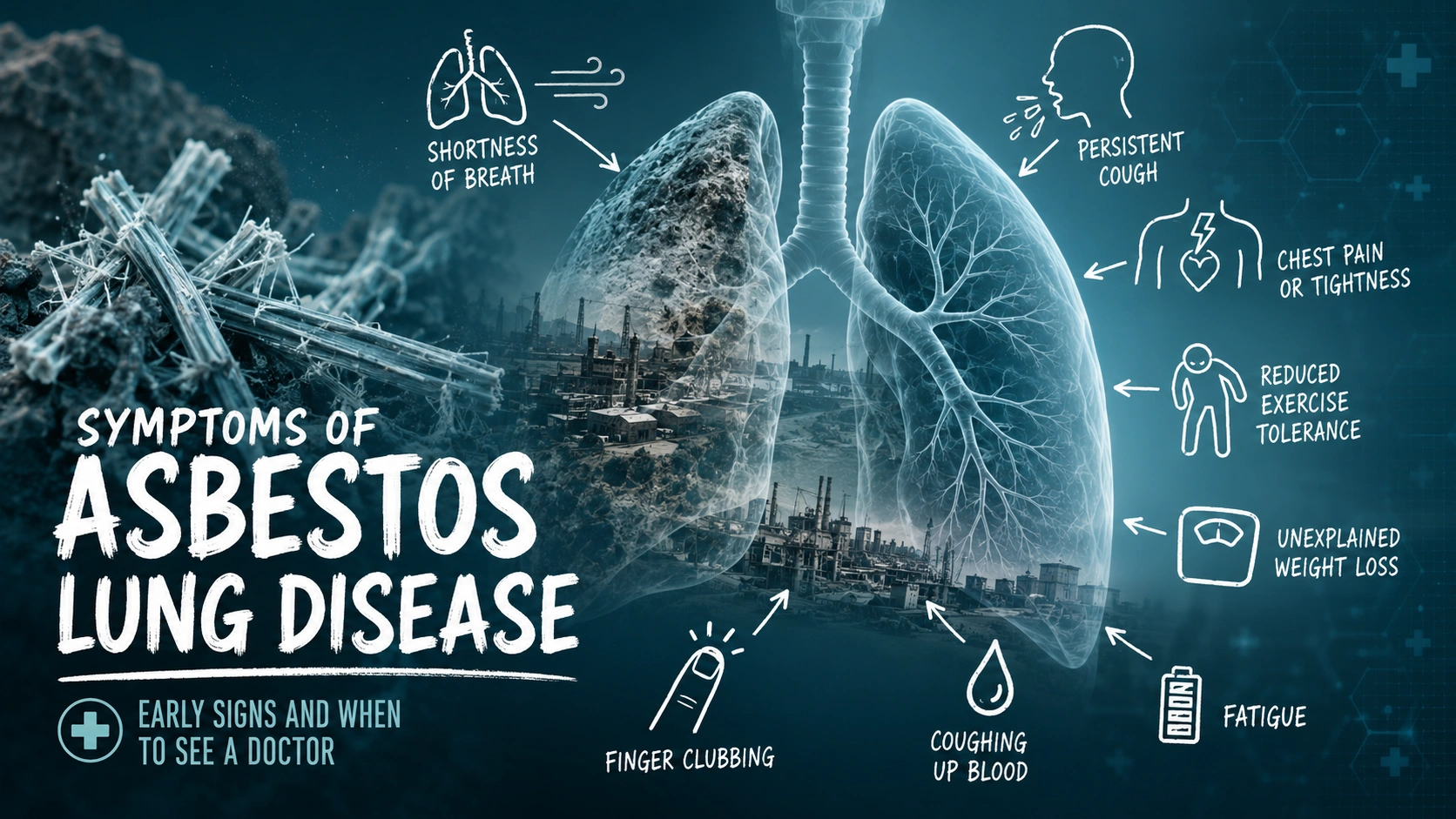
The most common symptoms associated with asbestos-related respiratory diseases can include shortness of breath, persistent cough, chest pain or tightness, and reduced ability to tolerate physical activity. Some conditions may also cause unexplained weight loss, loss of appetite, difficulty swallowing, or other symptoms.
But there is no single set of symptoms that proves someone has an asbestos-related disease.
Asbestosis, lung cancer, pleural mesothelioma, and noncancerous pleural disease are different conditions. Their symptoms can overlap, and many of the same symptoms can also be caused by heart disease, COPD, infections, asthma, and other illnesses.
That is why an exposure history matters alongside the symptoms.
What Are the Symptoms of Asbestos Lung Disease?
The symptoms of asbestos lung disease depend on which disease has developed.
Possible symptoms and signs across different asbestos-related conditions include:
- shortness of breath;
- persistent cough;
- chest pain or chest tightness;
- reduced exercise tolerance;
- unexplained weight loss;
- loss of appetite;
- fatigue;
- finger clubbing in some cases;
- difficulty swallowing in some people with pleural mesothelioma;
- coughing up blood, which requires prompt medical evaluation.
Not everyone will experience all of these symptoms. Some findings, such as finger clubbing or abnormal breath sounds, are clinical signs that may be noticed during examination rather than symptoms a person feels.
The pattern also matters.
Gradually worsening breathlessness may fit a different clinical picture from coughing up blood or unexplained weight loss. None of these patterns should be used to diagnose asbestos disease without medical evaluation.
Why Symptoms Can Take Decades to Appear
One of the defining challenges of asbestos-related disease is the delay between exposure and illness.
The exposure may have happened during a previous career or at a worksite that no longer exists. A person may have retired before symptoms appeared. Some people may not have known that materials around them contained asbestos.
Asbestos fibers can be inhaled when airborne fibers are released from asbestos-containing materials. Asbestos exposure is associated with noncancerous diseases including asbestosis and pleural disease, as well as cancers including lung cancer and mesothelioma.
The diseases do not necessarily develop on the same timeline or through identical biological processes.
The practical lesson is straightforward: the absence of symptoms immediately after exposure does not rule out later disease.
At the same time, past asbestos exposure does not mean that every cough or episode of breathlessness is caused by asbestos. Symptoms need to be evaluated in their full medical context.
1. Shortness of Breath
Shortness of breath is one of the most important symptoms associated with several asbestos-related diseases.
In asbestosis, lung tissue becomes scarred. This scarring can make it harder for the lungs to function normally and for oxygen and carbon dioxide to move efficiently between the lungs and bloodstream.
The symptom may begin subtly.
A person might first notice becoming unusually winded while climbing stairs, walking uphill, carrying groceries, or doing work that previously felt manageable. As lung impairment progresses, breathlessness may occur with less demanding activity.
Shortness of breath can also occur with pleural mesothelioma. In some cases, fluid accumulation in the pleural space can contribute to breathing difficulty.
However, breathlessness is not specific to asbestos disease. Heart conditions, COPD, asthma, pneumonia, pulmonary embolism, anemia, and many other conditions can cause similar symptoms.
New, persistent, or worsening shortness of breath deserves medical evaluation.
2. Persistent Cough
A persistent cough can occur in asbestos-related respiratory disease, including asbestosis.
In asbestosis, the cough is often described as persistent and dry. However, the characteristics of a cough alone cannot identify its cause.
Coughing is one of the most common respiratory symptoms in medicine. It can be related to infections, asthma, COPD, reflux, medications, smoking, lung cancer, environmental irritants, and many other causes.
The context becomes particularly important when a persistent cough occurs in someone with a meaningful history of asbestos exposure.
A clinician may want to know when the cough began, whether it is worsening, whether mucus or blood is present, whether there is associated chest pain or breathlessness, and whether there are systemic symptoms such as unexplained weight loss.
3. Chest Pain or Tightness
Chest discomfort can appear in several asbestos-related conditions, but the nature and cause of the pain can vary.
Asbestosis may be associated with chest tightness or discomfort.
Pleural mesothelioma can cause chest pain, and disease affecting the pleura may produce symptoms related to the tissues surrounding the lungs rather than the lung tissue itself.
Chest pain has many possible causes, including conditions unrelated to asbestos.
Because some causes of chest pain are medical emergencies, severe or sudden chest pain should not be attributed to past asbestos exposure without urgent assessment.
The same principle applies throughout asbestos medicine: a known exposure history is important, but it should not become the explanation for every new symptom without appropriate evaluation.
4. Reduced Exercise Tolerance
Sometimes the first noticeable change is not breathlessness at rest. It is a gradual loss of physical capacity.
Activities that once felt routine may become harder.
A person may need to stop while walking a familiar distance, take breaks during yard work, or become breathless during routine tasks. This change may develop gradually enough that it is initially attributed to aging or being out of shape.
In a person with asbestosis, reduced exercise tolerance can reflect impaired lung function associated with fibrosis.
However, reduced exercise tolerance is nonspecific. Heart disease, anemia, deconditioning, other respiratory diseases, and numerous medical conditions can produce a similar change.
What matters is a persistent or progressive departure from a person’s previous baseline, particularly when accompanied by respiratory symptoms.
5. Unexplained Weight Loss and Loss of Appetite
Unexplained weight loss and reduced appetite are not specific to asbestos-related disease, but they can occur in serious illnesses, including cancer.
Weight loss deserves particular attention when it is unintentional and occurs alongside symptoms such as persistent cough, chest pain, or increasing breathlessness.
It is important not to use weight loss as evidence of a particular diagnosis.
Cancer is only one of many possible explanations. Digestive disorders, endocrine conditions, chronic infections, medication effects, depression, and other illnesses can also contribute to unintended weight change.
A clinician can evaluate the symptom in combination with medical history, physical examination, laboratory findings, imaging, and other relevant information.
6. Fatigue
Fatigue is common across many illnesses and can occur for many reasons.
A person with impaired respiratory function may find ordinary activities more physically demanding. Cancer and its treatment can also contribute to fatigue through multiple mechanisms.
But fatigue alone is a weak indicator of asbestos-related disease because it is so nonspecific.
Its importance increases when it appears as part of a broader pattern involving persistent respiratory symptoms, unexplained weight loss, abnormal imaging, or a significant asbestos exposure history.
7. Finger Clubbing
Finger clubbing is a physical change in which the fingertips become enlarged and the nails change shape.
It can occur in some people with chronic lung diseases, including advanced asbestosis, and in association with other pulmonary and cardiovascular conditions.
Clubbing is a clinical sign, not a diagnosis.
Someone noticing a persistent change in the shape of the fingertips or nails should discuss it with a health care professional. A clinician can examine the finding and consider it alongside respiratory symptoms and medical history.
The absence of clubbing does not rule out asbestos-related disease.
8. Coughing Up Blood
Coughing up blood, medically called hemoptysis, should not be treated as a routine symptom to monitor at home.
There are many possible causes, ranging from airway irritation and infection to more serious pulmonary disease.
In the context of possible asbestos-related disease, coughing up blood requires medical assessment because lung cancer is among the diseases associated with asbestos exposure.
The symptom does not prove that someone has cancer.
It does mean that medical evaluation should not be delayed. Large amounts of blood, significant breathing difficulty, dizziness, or other severe symptoms require emergency medical care.
Symptoms Differ by Asbestos-Related Disease
The term “asbestos lung disease” can be misleading if it is interpreted as one diagnosis.
Asbestos exposure is associated with several distinct conditions, and their symptom patterns are not identical.
Understanding the differences can help a patient describe concerns more clearly, but symptoms alone still cannot determine which condition is present.
Asbestosis Symptoms
Asbestosis is a noncancerous chronic lung disease caused by inhaling asbestos fibers. It involves scarring of lung tissue.
Common symptoms may include:
- progressive shortness of breath;
- persistent dry cough;
- chest tightness or pain;
- reduced exercise tolerance.
Finger clubbing can occur in some cases.
Asbestosis generally develops after substantial exposure, often in occupational settings, and symptoms can take many years to become apparent.
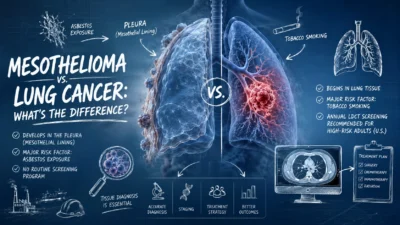
The disease should not be confused with mesothelioma or lung cancer. Asbestosis is pulmonary fibrosis associated with asbestos exposure, while the other two conditions are cancers.
Lung Cancer Symptoms
Asbestos exposure can cause lung cancer.
Possible lung cancer symptoms may include persistent or worsening cough, coughing up blood, chest pain, shortness of breath, unexplained weight loss, and fatigue.
These symptoms are not unique to lung cancer.
The combination of asbestos exposure and smoking is particularly important because both contribute to lung cancer risk. A person’s individual risk and screening eligibility should be discussed with a qualified clinician rather than determined from an online symptom list.
Pleural Mesothelioma Symptoms
Pleural mesothelioma develops in the mesothelium surrounding the lungs and lining the chest cavity.
It is not the same disease as lung cancer.
Symptoms of pleural mesothelioma can include shortness of breath, chest pain, and persistent cough. Some patients may experience difficulty swallowing or other symptoms as disease affects structures in the chest.
Fluid accumulation in the pleural space can contribute to shortness of breath.
Because these symptoms overlap with many other diseases, diagnosis requires appropriate medical evaluation.
Pleural Disease and Pleural Plaques
Asbestos exposure can cause noncancerous changes in the pleura.
Pleural plaques are localized areas of thickening. Other asbestos-related pleural conditions can include diffuse pleural thickening and pleural effusion.
Not every pleural abnormality causes noticeable symptoms.
Some changes may be discovered on imaging performed for another reason. Their significance depends on the specific finding and broader clinical context.
An imaging finding should be interpreted by a qualified clinician rather than treated as a diagnosis based on the radiology term alone.
Can You Have Asbestos Lung Damage Without Symptoms?
Yes. Some asbestos-related abnormalities may be present before a person notices obvious symptoms.
This is one reason symptom checklists have limitations.
Pleural plaques, for example, may be discovered incidentally during chest imaging. Other asbestos-related changes may also be identified during evaluation before a person recognizes significant respiratory limitation.
The opposite problem can occur as well: someone may have cough or breathlessness but no asbestos-related disease.
Symptoms and exposure history are pieces of the clinical picture, not substitutes for diagnosis.
People concerned about meaningful past exposure should discuss the history with a health care professional, especially if they develop respiratory symptoms.
How Do Doctors Evaluate Symptoms of Asbestos Lung Disease?
Evaluation begins with the history.
A clinician may ask about current symptoms, previous occupations, job duties, industries, military service, construction or renovation activities, duration of possible exposure, use of respiratory protection, smoking history, and other medical conditions.
The timing of exposure can be important because asbestos-related diseases may have long latency periods.
Depending on the clinical situation, evaluation may include a physical examination, chest imaging, and pulmonary function tests.
Physical Examination
During a respiratory examination, a clinician listens to the lungs and evaluates breathing.
Certain abnormal breath sounds may occur with fibrotic lung disease, but auscultation alone cannot establish an asbestos-related diagnosis.
The clinician may also look for signs such as finger clubbing and evaluate other findings relevant to heart and lung function.
Chest X-Ray and CT Imaging
Chest imaging can help identify abnormalities involving the lungs and pleura.
A chest X-ray may show certain patterns of lung or pleural disease. CT imaging provides greater anatomical detail and may help characterize fibrosis, pleural abnormalities, masses, fluid, or other findings.
Imaging results must be interpreted in context.
Not every abnormality in a person with previous asbestos exposure is caused by asbestos, and different asbestos-related diseases require different diagnostic pathways.
Pulmonary Function Tests
Pulmonary function tests measure different aspects of lung performance.
They can help assess lung volumes, airflow, and gas transfer. In fibrotic disease such as asbestosis, testing may show patterns consistent with restrictive impairment or reduced gas transfer.
The test results do not independently reveal when or where asbestos exposure occurred. They form part of a broader clinical evaluation.
Additional Testing When Needed
Further evaluation depends on what disease is suspected.
The workup for possible asbestosis differs from the diagnostic pathway for a suspicious lung mass or possible mesothelioma.
Additional testing may involve specialized imaging, procedures to evaluate pleural fluid, bronchoscopy, or tissue sampling when clinically indicated.
A lung biopsy is not automatically required for every person with possible asbestos-related disease.
What Should You Tell Your Doctor About Past Asbestos Exposure?
The most useful exposure history is specific.
Instead of simply saying, “I may have been exposed to asbestos,” provide as much context as you can remember.
Useful information may include:
- industries in which you worked;
- names and locations of employers;
- job titles and actual daily tasks;
- construction, demolition, insulation, shipyard, industrial, or maintenance work;
- work around older buildings or equipment;
- years when possible exposure occurred;
- whether dust was regularly present;
- whether respiratory protection was used;
- military service and occupational duties;
- possible household exposure from another person’s dusty work clothing.
Do not delay medical evaluation because you cannot remember product names or exact dates.
A partial exposure history is still useful, and additional details may be reconstructed over time.
When Should You See a Doctor?
Contact a health care professional if you have persistent or worsening respiratory symptoms, especially if you have a known or suspected history of asbestos exposure.
Symptoms worth discussing include persistent shortness of breath, chronic cough, chest discomfort, unexplained decline in exercise tolerance, or unexplained weight loss.
Some symptoms require more urgent attention.
Seek prompt medical care for coughing up blood, significant breathing difficulty, or severe or sudden chest pain. Emergency symptoms should be assessed based on their severity rather than waiting to determine whether asbestos is the cause.
If you are currently well but concerned about significant historical exposure, a clinician can review your history and discuss whether any individualized evaluation is appropriate.
What Symptoms Cannot Tell You
Symptoms can tell you that something may be wrong. They cannot tell you, by themselves, whether asbestos is responsible.
Shortness of breath is not unique to asbestosis.
Chest pain is not unique to mesothelioma.
A cough is not proof of lung cancer.
And a history of asbestos exposure does not turn every respiratory symptom into an asbestos-related disease.
The reverse is also important: some asbestos-related abnormalities may exist without obvious early symptoms.
The most useful approach combines a careful exposure history with appropriate medical evaluation. When a clinician understands where a person worked, what tasks they performed, when possible exposure occurred, and how symptoms have changed, the pieces of the story become more clinically useful.
Asbestos exposure may belong to the distant past. The symptoms, if they appear, deserve evaluation in the present.
- About the Author
- Latest Posts

Salwa Alifah Yusrina is the Editor-in-Chief at Medslat.com. She is a professional Nutritionist with over 7 years of clinical and research experience. She holds a Master’s degree in Nutrition Science from Hasanuddin University. At Medslat.com, she oversees the editorial direction and ensures that all health and nutrition content adheres to the highest standards of accuracy and evidence-based science.