For years, patients and families searching for specialized cancer care encountered the name Cancer Treatment Centers of America. The organization, widely known as CTCA, operated cancer hospitals and outpatient facilities with a model centered on cancer treatment and supportive services.
Today, the name leads to a different story.
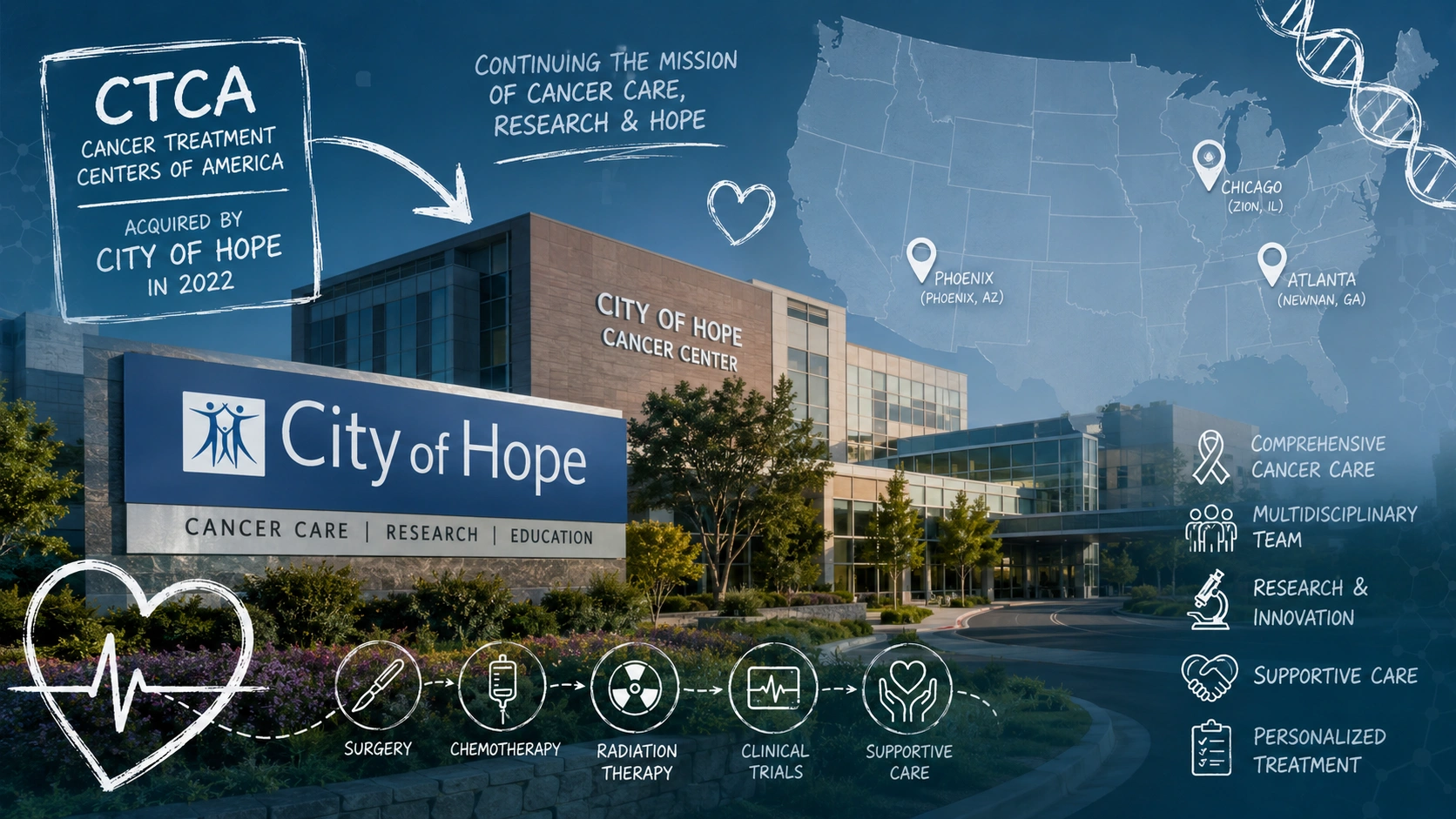
Cancer Treatment Centers of America is now part of City of Hope. City of Hope acquired CTCA in 2022, and the former CTCA hospitals in Atlanta, Chicago, and Phoenix were subsequently renamed under the City of Hope brand.
That means patients searching for Cancer Treatment Centers of America locations today should look for the corresponding City of Hope cancer centers. It also means that many older online lists describing dozens of unrelated hospitals as CTCA locations are inaccurate.
Understanding that distinction makes it much easier to find the right facility and evaluate the broader range of specialized cancer centers available across the United States.
What Was Cancer Treatment Centers of America?
Cancer Treatment Centers of America, commonly abbreviated as CTCA, was a network of oncology hospitals and outpatient care facilities focused on treating people with cancer.
The organization became known for combining cancer-directed treatment with supportive services designed to address some of the physical and practical challenges that can accompany cancer and its treatment.
Depending on an individual patient’s needs and the services available at a particular location, cancer care may involve multiple disciplines. These can include medical oncology, surgical oncology, radiation oncology, nursing, nutrition support, rehabilitation, behavioral health, pain management, and other supportive services.
This multidisciplinary idea is important because cancer care rarely involves one decision or one type of clinician. A person may need diagnostic imaging, pathology review, surgery, systemic therapy, radiation therapy, symptom management, nutritional support, rehabilitation, or psychosocial care at different stages of treatment.
CTCA built its identity around coordinating different aspects of that experience. However, the organization has since undergone a major institutional change.
Is Cancer Treatment Centers of America Still Operating?
Cancer Treatment Centers of America no longer operates as a separate health care brand in the way many patients may remember it.
City of Hope acquired CTCA in 2022. The acquisition included CTCA hospitals in Atlanta, Chicago, and Phoenix. In 2023, City of Hope announced the renaming of those locations as part of the organizations’ integration.
For someone who previously received care at CTCA, or who finds the old brand name in an article, advertisement, medical record, or recommendation, the important point is simple: the former CTCA cancer centers are now part of City of Hope.
The change is more than a shortened name or redesigned sign. It connects the former CTCA locations with a larger cancer research and treatment organization that includes clinical care, research, education, and a National Cancer Institute-designated Comprehensive Cancer Center in Duarte, California.
Patients should still verify the exact services available at the location they are considering. A large health system can have multiple hospitals and outpatient centers, but individual services, specialists, clinical trials, and treatment programs may vary by location.
Former Cancer Treatment Centers of America Locations
At the time of the 2022 acquisition, CTCA’s hospital network included locations serving the Atlanta, Chicago, and Phoenix areas. These facilities subsequently transitioned to the City of Hope brand.
1. Former CTCA Atlanta
The former Cancer Treatment Centers of America Atlanta hospital is now City of Hope Cancer Center Atlanta.
The hospital is located in Newnan, Georgia, southwest of Atlanta. It serves adults with different types and stages of cancer and provides cancer-focused diagnostic and treatment services.
Patients considering care at the Atlanta-area center should check its current official location page for available specialists, cancer programs, appointment information, and insurance details.
2. Former CTCA Chicago
The former CTCA hospital serving the Chicago area is now City of Hope Cancer Center Chicago.
The center is located in Zion, Illinois, north of Chicago. The Zion location was included in City of Hope’s acquisition of Cancer Treatment Centers of America and now operates as part of the broader City of Hope system.
As with any cancer center, patients should evaluate the center based on the expertise relevant to their diagnosis rather than the institution’s name alone.
A person with breast cancer, for example, may have different specialist and treatment needs from someone with leukemia, pancreatic cancer, prostate cancer, lung cancer, or a rare sarcoma. The important question is whether a center has the right disease-specific team and capabilities for the individual case.
3. Former CTCA Phoenix
The Phoenix-area hospital was also part of the CTCA network acquired by City of Hope.
People searching online for CTCA Phoenix may therefore encounter the newer City of Hope branding. Because hospital services, programs, contact information, and referral processes can change, patients should confirm current details through official City of Hope resources before making an appointment or arranging travel.
This is particularly important for older articles about Cancer Treatment Centers of America. Historical addresses and phone numbers may remain indexed in search engines long after an organization changes its structure or branding.
What Happened to the Other Cancer Centers in Older CTCA Lists?
This is where much of the online confusion begins.
Cancer Treatment Centers of America was a specific organization. It was not a general name for every major cancer hospital in the United States.
Institutions such as MD Anderson Cancer Center, Memorial Sloan Kettering Cancer Center, Dana-Farber Cancer Institute, Mayo Clinic Comprehensive Cancer Center, and other academic cancer centers were not simply branches of CTCA.
Many prominent institutions belong to the broader network of NCI-designated cancer centers. That is a separate concept.
The National Cancer Institute maintains a network of designated cancer centers that meet rigorous standards related to cancer research. The network includes institutions in states across the country and the District of Columbia.
An NCI designation should not be interpreted as a simple government ranking of the “best” hospitals. Cancer centers differ in research strengths, clinical programs, specialist expertise, patient populations, and available trials.
For patients, this distinction creates two different search paths:
If you are specifically looking for the former Cancer Treatment Centers of America, look for the corresponding City of Hope facilities.
If you are looking more broadly for specialized cancer centers in the United States, the official NCI cancer center directory is a better starting point.
Cancer Treatment Centers of America and City of Hope
The transition from CTCA to City of Hope connected the former network with an organization whose history reaches back to 1913.
City of Hope began focusing on cancer research and treatment in the 1940s. Its Duarte center received NCI designation in 1981 and comprehensive cancer center designation in 1998.
That history helps explain the significance of the CTCA acquisition. The former CTCA hospitals became part of a broader organization that combines cancer care with biomedical research and education.
For patients, however, organizational scale should not replace diagnosis-specific evaluation.
A national system may offer a broad range of expertise, but not every location necessarily provides every procedure, specialist, or clinical trial. Before choosing a location, patients should confirm that the facility treats their specific cancer type and offers the services relevant to their treatment plan.
What Types of Cancer Care May Be Available?
Cancer treatment depends on the type of cancer, its stage, molecular characteristics, previous treatment, the patient’s overall health, and other clinical factors.
Depending on the diagnosis and location, cancer care may involve several approaches.
Surgery
Cancer surgery can be used to remove a tumor, obtain tissue for diagnosis, determine the extent of disease, reduce tumor burden in selected situations, or address complications.
The appropriate surgical approach varies substantially between cancer types. For complex or uncommon operations, patients may want to ask how frequently a surgeon and hospital perform the specific procedure being considered.
Chemotherapy and Other Systemic Treatments
Systemic treatments travel through the bloodstream or act throughout the body.
Depending on the cancer, treatment may include traditional chemotherapy, targeted therapy, immunotherapy, hormone therapy, or combinations of different approaches.
The presence of a new or heavily promoted treatment does not mean it is appropriate for every cancer. Treatment selection should be based on the diagnosis and relevant clinical evidence.
Radiation Therapy
Radiation therapy uses high-energy radiation to damage cancer cells and can be used in different settings.
For some patients, radiation is part of treatment intended to eliminate or control cancer. In other situations, it may be used to relieve symptoms.
The type, dose, schedule, and technology used depend on the cancer and treatment objective.
Clinical Trials
Clinical trials study new ways to prevent, diagnose, monitor, or treat cancer and manage its effects.
Some patients seek large cancer centers specifically because of access to clinical research. However, trial eligibility can be narrow and may depend on cancer type, stage, biomarkers, previous treatment, age, organ function, and other criteria.
Patients interested in clinical trials should ask whether there are studies relevant to their specific situation rather than assuming that any trial at a cancer center will be appropriate.
The Role of Supportive Cancer Care
Treating cancer is only one part of living through cancer.
The disease and its treatment can affect appetite, body weight, physical function, pain, sleep, mental health, work, finances, relationships, and family responsibilities.
A multidisciplinary cancer program may therefore involve professionals beyond the primary oncology team. Depending on the patient’s needs and the services available, care may include oncology nurses, social workers, registered dietitians, psychologists, psychiatrists, rehabilitation specialists, pain specialists, genetic counselors, and palliative care clinicians.
The purpose of these services is not to replace cancer-directed treatment. They address different dimensions of care.
For example, an oncology dietitian may help a patient manage nutrition challenges associated with treatment. A rehabilitation specialist may help address changes in strength or function. A social worker may help navigate practical resources and support needs.
Palliative care can also be provided alongside active cancer treatment. Its role can include symptom relief, communication about care goals, and support for patients and families.
The exact mix of services varies among centers and patients.
How to Choose a Cancer Treatment Center
The search for a cancer center often begins with a famous name. A better decision process begins with the diagnosis.
Cancer is a broad group of diseases, and expertise can be highly specific. A hospital known nationally for cancer care may have different strengths across disease programs.
Before selecting a treatment center, consider several practical questions.
Does the Center Regularly Treat Your Type of Cancer?
This is especially important for rare cancers and complex cases.
Ask whether the center has specialists focused on the diagnosis and whether relevant cases are reviewed by a multidisciplinary team.
For some uncommon cancers, pathology review by specialists with disease-specific experience may also be valuable.
Is a Second Opinion Appropriate?
A second opinion can confirm an existing treatment plan or identify another reasonable approach.
Patients considering a second opinion can ask what records are needed in advance. These may include pathology reports, pathology slides, imaging studies, laboratory results, operative reports, molecular testing, and previous treatment records.
Seeking another opinion does not automatically mean changing doctors or transferring all care to another hospital.
Are Relevant Clinical Trials Available?
Ask about trials that are relevant to the specific diagnosis and treatment stage.
A center with hundreds of studies may still have no appropriate trial for one individual patient, while another center may have a study closely matched to the patient’s cancer characteristics.
Can Care Be Coordinated Close to Home?
Travel can become a major burden when treatment requires frequent visits over weeks or months.
Some patients receive specialized surgery, a second opinion, or a complex consultation at a major cancer center while completing other components of care closer to home.
Ask whether the center coordinates with community oncologists and how medical records, imaging, laboratory results, and treatment recommendations are shared.
Does Your Insurance Cover the Center?
Insurance network status can affect access and out-of-pocket costs.
Before scheduling major treatment or traveling, verify coverage with the insurance company and the center. Ask about referrals, prior authorization, physician billing, hospital billing, laboratory services, and imaging services.
Are Cancer Treatment Centers of America NCI-Designated?
This question requires a careful distinction between the former CTCA organization and City of Hope.
The former Cancer Treatment Centers of America brand should not be treated as synonymous with the NCI-Designated Cancer Centers Program.
City of Hope Comprehensive Cancer Center in Duarte, California, is an NCI-Designated Comprehensive Cancer Center. According to the National Cancer Institute, City of Hope received NCI designation in 1981 and comprehensive cancer center designation in 1998.
That fact does not mean every hospital once branded as CTCA independently received its own separate NCI comprehensive cancer center designation.
When evaluating claims about NCI designation, check the official NCI directory and the exact institution named in the designation.
This distinction matters because “NCI-designated” has a specific institutional meaning. It should not be used as a general marketing label for unrelated facilities or automatically applied across every location within a large health system.
Other NCI-Designated Cancer Centers Across the United States
Patients looking beyond former Cancer Treatment Centers of America locations can use the National Cancer Institute’s official cancer center finder.
The NCI network includes dozens of designated cancer centers across the United States. These institutions conduct cancer research and, depending on the type of center and institution, may provide specialized clinical care and access to research programs.
Rather than relying on an old static list of addresses and phone numbers, patients should use the official NCI directory. Institutional names, leadership, contact information, and designations can change over time.
The directory can help readers search by name, state, region, or geographic area.
Once several potential centers have been identified, the next step is more specific: compare disease programs, specialists, clinical trials, travel requirements, referral procedures, and insurance coverage.
A directory tells you where a center is. It cannot tell you which center is right for an individual diagnosis.
Finding the Right Cancer Care After the CTCA Transition
The story behind the keyword Cancer Treatment Centers of America is now partly historical and partly practical.
CTCA was a specific cancer care network. City of Hope acquired it in 2022, and the former CTCA hospitals transitioned to the City of Hope name.
For patients and caregivers, that means old CTCA searches should now lead to a more precise set of questions.
Are you looking for a former CTCA hospital? Check the current City of Hope location information.
Are you looking for a highly specialized center for a particular cancer? Compare disease-specific expertise rather than relying only on a brand name.
Are you searching for NCI-designated centers throughout the country? Use the official NCI directory rather than an outdated static list.
The name on the building matters less than the clinical question that brought a patient there. The most useful cancer center search starts with the diagnosis, the expertise required, and the practical realities of receiving care.
- About the Author
- Latest Posts

Salwa Alifah Yusrina is the Editor-in-Chief at Medslat.com. She is a professional Nutritionist with over 7 years of clinical and research experience. She holds a Master’s degree in Nutrition Science from Hasanuddin University. At Medslat.com, she oversees the editorial direction and ensures that all health and nutrition content adheres to the highest standards of accuracy and evidence-based science.