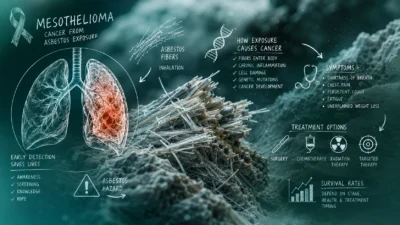
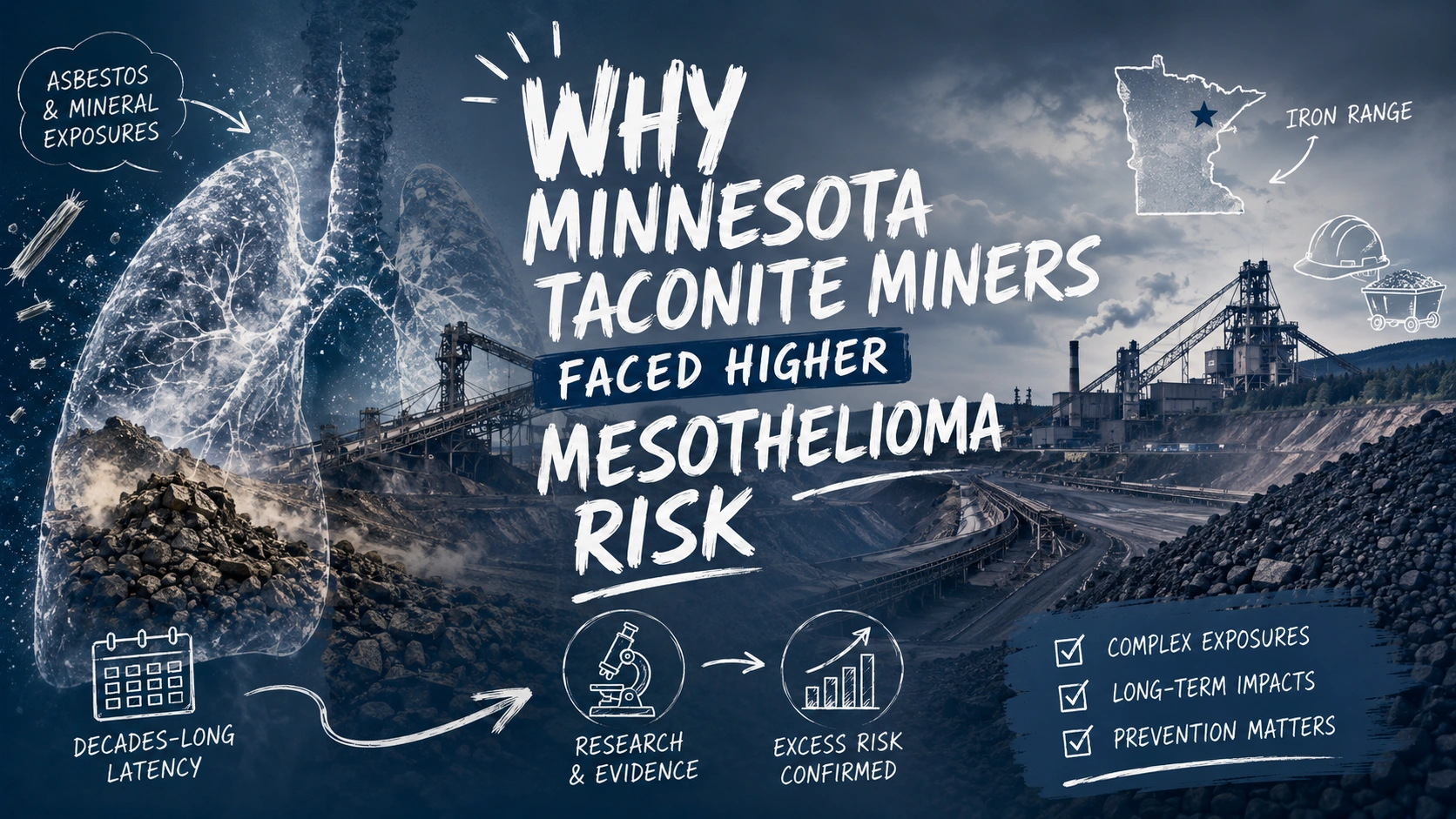
For decades, an unsettling pattern emerged on Minnesota’s Iron Range: men who had worked in the region’s taconite industry were being diagnosed with mesothelioma, a rare cancer strongly associated with asbestos exposure.
The central question seemed simple but proved difficult to answer. Were the cancers caused mainly by commercial asbestos products historically used in mining facilities, by mineral particles released while mining and processing taconite, or by some combination of occupational exposures?
A major University of Minnesota investigation was designed to examine that question. The research eventually became one of the most extensive studies of occupational health in the Minnesota taconite industry.
The results confirmed that taconite workers experienced elevated mesothelioma mortality compared with the Minnesota population. What the research did not produce was a simple explanation that every case could be attributed to a single type of mineral fiber. Later studies have continued to investigate the relationship between mesothelioma, employment duration, commercial asbestos, and exposure to elongate mineral particles generated or encountered during mining operations.
Why the Iron Range Became the Focus of a Major Health Investigation
The concern did not begin with a single mine or a single worker.
Minnesota health officials had been investigating mesothelioma patterns in northeastern Minnesota for years. An earlier Minnesota Department of Health investigation identified 17 mesothelioma cases among iron miners diagnosed from 1988 through 1996 who were still Minnesota residents. Researchers examined occupational histories to determine where asbestos exposure may have occurred.
The issue became more urgent as additional cases were identified.
Mesothelioma deserves particular attention in occupational research because asbestos is its major established risk factor. The cancer develops in the mesothelium, the thin tissue lining structures including the lungs, chest wall, and abdomen. Because asbestos-related disease can emerge decades after exposure, reconstructing the cause of a case often requires investigators to look far back into a worker’s employment history.
That long latency period was particularly important on the Iron Range. A worker diagnosed with mesothelioma in the 2000s could have experienced a relevant occupational exposure in the 1950s, 1960s, or 1970s.
Researchers therefore needed more than contemporary air samples. They needed decades of employment records, job histories, industrial hygiene data, medical information, and a better understanding of the particles present in different mining environments.
Inside the Minnesota Taconite Workers Health Study
The University of Minnesota research program examined a historical cohort of approximately 46,000 people who had worked in Minnesota’s taconite industry. Researchers evaluated mortality and disease patterns while also conducting exposure assessment and studies focused on respiratory health.
The investigation involved several interconnected questions:
- Were taconite workers dying from mesothelioma at higher rates than expected?
- Was lung cancer mortality also elevated?
- Did disease risk increase with employment duration?
- Were measured exposures to elongate mineral particles associated with mesothelioma?
- Could commercial asbestos used historically in mining facilities explain the excess?
- Were communities near mining operations experiencing significant exposure to airborne mineral particles?
Answering these questions required several types of research rather than one experiment.
Researchers reconstructed work histories and developed estimates of occupational exposure. Environmental scientists collected and analyzed airborne particles. Other parts of the research examined current and former workers for respiratory abnormalities.
This distinction matters because an epidemiological association can identify a pattern without necessarily identifying the precise particle responsible for it.
What the Research Found About Mesothelioma
The clearest finding was that mesothelioma mortality among the taconite worker cohort was higher than expected compared with Minnesota’s general population.
A mortality analysis published in 2014 reported evidence of increased mortality from mesothelioma and lung cancer, along with some cardiovascular outcomes, among Minnesota taconite workers. The authors cautioned that occupational exposures could contribute to the increased risks while nonoccupational factors might also matter.
A later case-control analysis examined the relationship more closely. Researchers reported that mesothelioma risk was associated with longer employment in the taconite industry and with cumulative exposure to elongate mineral particles under the exposure definitions used in the study.
That finding was important, but it did not completely resolve the causation question.
The exposure measurements used in parts of the research could not always distinguish asbestiform particles from non-asbestiform particles. That limitation makes the language used to describe the issue especially important.
Calling all particles associated with taconite mining “taconite asbestos” is misleading. Taconite mining and processing can involve exposure to elongate mineral particles of different mineralogical forms and dimensions. Commercial asbestos was also historically present in industrial equipment and materials used at mining operations.
The health effects of these exposures cannot simply be assumed to be identical.
Commercial Asbestos or Taconite-Related Mineral Particles?
This became the central scientific tension behind the research.
Commercial asbestos was widely used in American industry during much of the 20th century. Mining facilities, like many other heavy industrial workplaces, used asbestos-containing materials for insulation and other heat-resistant applications.
That created one plausible pathway of exposure for workers.
At the same time, mining, crushing, and processing taconite can generate airborne mineral dust containing elongate mineral particles. Researchers therefore investigated whether these particles might independently contribute to mesothelioma or other respiratory diseases.
A 2018 review by researchers associated with the Minnesota research program concluded that the excess mesothelioma cases were most likely explained by historical exposure to asbestiform particles, including commercial asbestos used in earlier mining operations. The researchers emphasized that earlier exposure metrics could not reliably distinguish asbestiform from non-asbestiform EMPs.
That interpretation did not end scientific investigation of the issue.
Research published in 2025 revisited mesothelioma risk using different definitions and dimensions of elongate mineral particles. The nested case-control study included 104 mesothelioma cases and 410 controls. It found possible positive associations for some cumulative exposure measures, but the authors also emphasized statistical uncertainty and methodological limitations. The findings supported continued investigation rather than a simple claim that one particle category had been definitively established as the sole cause.
The resulting picture is more nuanced than the original public debate suggested. The elevated mesothelioma risk is real, but separating the effects of historical commercial asbestos exposure from other occupational mineral exposures remains scientifically difficult.
What the Study Found About Lung Cancer
Mesothelioma and lung cancer should not be treated as interchangeable outcomes.
The large mortality study found higher-than-expected lung cancer mortality in the worker cohort compared with the Minnesota population. However, a separate analysis examining estimated occupational exposures did not find evidence that the measured taconite mining exposures increased lung cancer risk.
That apparent contrast illustrates an important principle in occupational epidemiology: a worker population can show elevated disease mortality without a specific workplace exposure metric being demonstrated as the cause.
Smoking is a major risk factor for lung cancer and can strongly affect population-level lung cancer patterns. Occupational studies therefore have to account for smoking history and other potential confounders when estimating the effect of workplace exposures.
For mesothelioma, the epidemiological question is different because asbestos exposure has a much stronger and more distinctive relationship with the disease.
Why Studying Dust Was So Important
The work was not limited to medical records.
Researchers also needed to understand what workers and nearby communities could actually inhale. Dust collection and particle characterization helped investigators compare the types, concentrations, and dimensions of mineral particles found in occupational and community environments.
The physical characteristics of a particle matter. Researchers studying elongate mineral particles examine factors such as mineral composition, length, width, aspect ratio, durability, and biological persistence.
These characteristics are part of the reason that the term “fiber” can become confusing in public discussions. Two particles may both appear long and narrow under microscopy while differing in mineral structure, dimensions, and potential biological behavior.
For occupational-health research, identifying a particle is only one step. Investigators must also estimate how much exposure occurred, how long it lasted, whether exposure changed across jobs and decades, and how those patterns relate to disease that may not appear until many years later.
Why Mesothelioma Can Appear Decades After Exposure
One of the greatest challenges in asbestos research is time.
Asbestos-related diseases generally do not appear immediately after exposure. Mesothelioma can develop after a latency period lasting several decades. That means a current diagnosis may reflect working conditions that no longer exist.
This long delay complicates both research and prevention.
Modern air sampling cannot directly reconstruct everything a worker inhaled 40 or 50 years ago. Investigators instead combine historical industrial hygiene measurements, employment records, job classifications, interviews, and statistical exposure models.
That is why the Minnesota research required such extensive historical reconstruction. The important exposure may have occurred long before the cancer registry recorded the eventual diagnosis.
What the Findings Mean for Current and Former Workers
The Minnesota research has value beyond determining what happened in previous generations of mining.
For current workplaces, the findings reinforce the importance of controlling airborne dust and complying with occupational exposure requirements. They also demonstrate why accurate records of job assignments and workplace exposures matter: the health effects of some occupational hazards may not become visible for decades.
Former workers who are concerned about past asbestos exposure should discuss their occupational history with a qualified healthcare professional. A work history can help clinicians understand potential risk, but exposure alone does not establish that a person has mesothelioma or another asbestos-related disease.
Screening is also more complicated than simply ordering one universal test for every exposed worker. Medical evaluation should account for exposure history, symptoms, age, smoking history, and other individual factors.
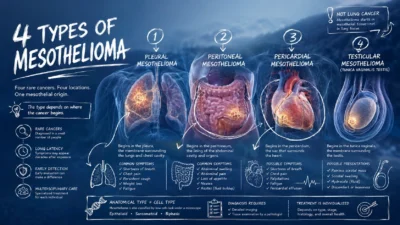
Symptoms that can occur with pleural mesothelioma include shortness of breath, chest pain, and fluid accumulation around the lungs, but these symptoms can have many other causes. They require appropriate medical evaluation rather than self-diagnosis.
Mesothelioma Treatment Has Changed Since the Original Investigation
The original discussion of the Iron Range study reflected an earlier period in mesothelioma care. Treatment options have evolved.
Current treatment planning may involve surgery, chemotherapy, radiation therapy, immunotherapy, targeted therapy, and palliative care, depending on factors such as the cancer’s location and stage, the patient’s overall health, and the goals of treatment.
Treatment is individualized. Surgery is appropriate only for selected patients, while systemic treatments such as chemotherapy or immunotherapy may be considered in other clinical situations. Palliative care can be integrated to manage symptoms and support quality of life.
The important distinction is that occupational research and clinical treatment answer different questions. Research into the Iron Range cases seeks to understand patterns of exposure and disease risk. Once an individual has been diagnosed, treatment decisions require specialized clinical evaluation based on that person’s disease characteristics and health status.
What the Iron Range Research Ultimately Changed
The story of mesothelioma on Minnesota’s Iron Range began with a disturbing pattern in disease records. It developed into a much larger question about industrial history, commercial asbestos, mineral dust, and the difficulty of reconstructing exposures that occurred decades earlier.
The research established that Minnesota taconite workers experienced an excess of mesothelioma and that employment duration and some measures of EMP exposure were associated with risk in epidemiological analyses. It also showed why identifying a single cause is difficult when workers may have encountered multiple particle types across different jobs and historical periods.
Later interpretations have emphasized historical commercial asbestos exposure as a likely major explanation, while more recent research continues to examine associations involving different dimensions and classifications of elongate mineral particles.
That uncertainty does not make the research inconclusive. It defines the question more precisely.
The lasting lesson from the Iron Range is that occupational disease can take decades to become visible, and understanding it requires more than counting cases. Researchers must reconstruct where people worked, what materials were present, what particles reached the air, and how those exposures changed over time.
For workers and communities, that evidence provides something the original investigation was created to find: a clearer picture of the risks, the limits of what science can currently attribute to a specific exposure, and the importance of preventing harmful occupational exposures before another generation has to wait decades for the consequences to become known.
- About the Author
- Latest Posts

Salwa Alifah Yusrina is the Editor-in-Chief at Medslat.com. She is a professional Nutritionist with over 7 years of clinical and research experience. She holds a Master’s degree in Nutrition Science from Hasanuddin University. At Medslat.com, she oversees the editorial direction and ensures that all health and nutrition content adheres to the highest standards of accuracy and evidence-based science.