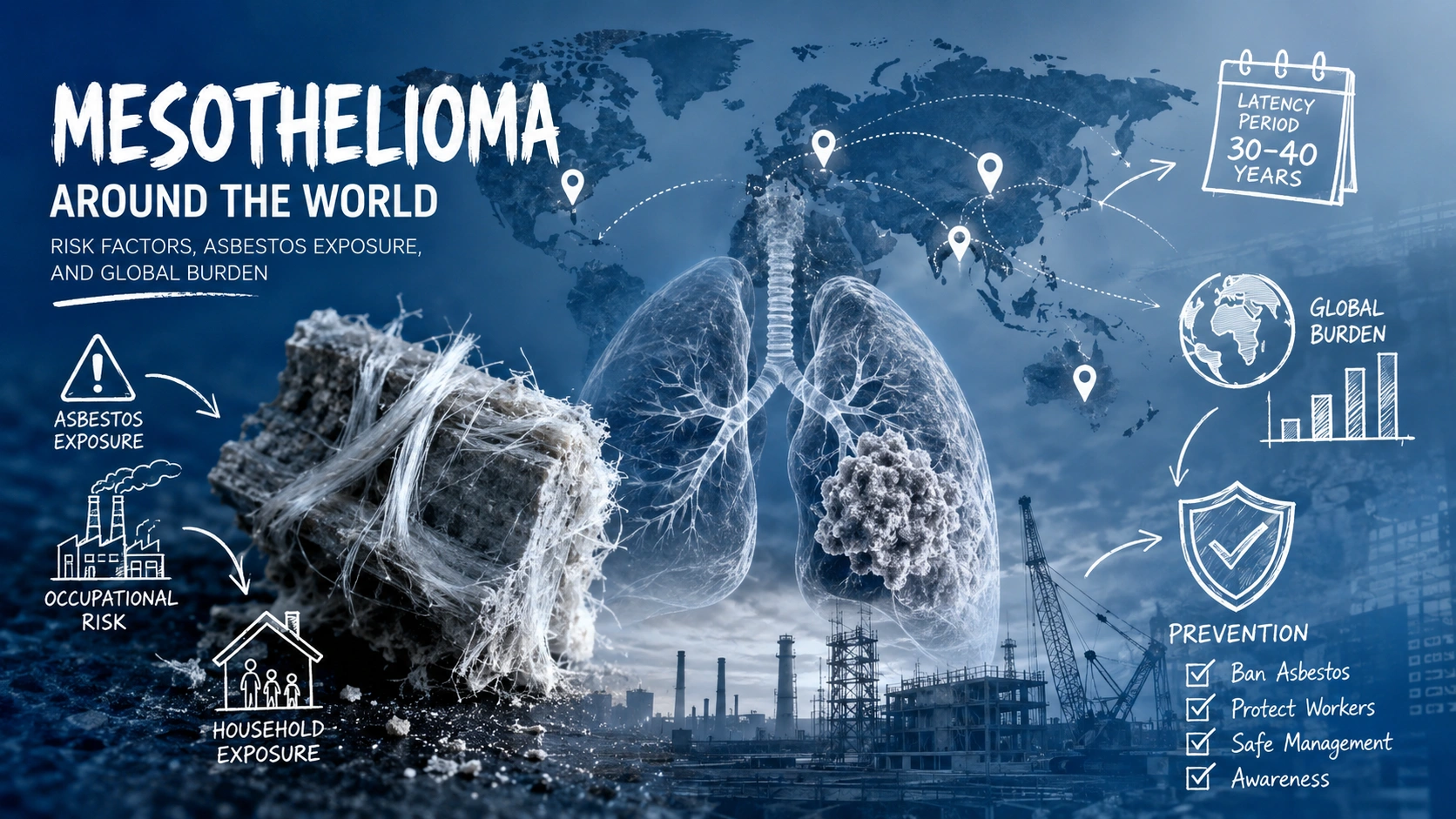
Mesothelioma is a rare cancer with a long history closely tied to asbestos exposure. Although many countries have banned or restricted asbestos, the disease remains a public health concern because mesothelioma can develop decades after exposure occurs.
The global picture is also uneven. Countries with extensive historical asbestos use often continue to record substantial numbers of cases, while countries where asbestos is still used may face disease burdens that are difficult to measure because of long latency periods, limited cancer surveillance, and challenges in diagnosis.
According to the World Health Organization (WHO), all major forms of asbestos are carcinogenic to humans. Exposure can cause mesothelioma as well as lung, laryngeal, and ovarian cancers and nonmalignant diseases such as asbestosis.
Understanding mesothelioma therefore requires more than looking at current asbestos use. Historical exposure, occupation, environmental conditions, household contact, and the long interval between exposure and diagnosis all influence when and where cases appear.
What Is Mesothelioma?
Mesothelioma is a cancer that develops from mesothelial cells, which form the thin tissue lining certain internal body cavities and organs. The National Cancer Institute (NCI) identifies asbestos exposure as the major risk factor for the disease.
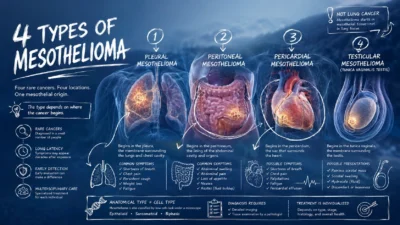
Mesothelioma is classified according to the anatomical site where it develops.
Pleural Mesothelioma
Pleural mesothelioma develops in the pleura, the tissue surrounding the lungs and lining the chest cavity. It is the most common anatomical form of the disease.
Because it affects structures within the chest, symptoms may include shortness of breath, chest pain, persistent cough, fatigue, and fluid accumulation around the lungs. These symptoms are not specific to mesothelioma and can occur in many other conditions.
Peritoneal Mesothelioma
Peritoneal mesothelioma develops in the peritoneum, the membrane lining the abdominal cavity and covering many abdominal organs.
Possible symptoms include abdominal pain or swelling, accumulation of fluid in the abdomen, loss of appetite, nausea, changes in bowel habits, and unexplained weight loss.
Pericardial Mesothelioma
Pericardial mesothelioma develops in the membrane surrounding the heart. It is extremely rare.
Symptoms may include chest pain, shortness of breath, irregular heartbeat, or signs related to fluid accumulation around the heart. Because the disease is so uncommon and its symptoms overlap with other cardiovascular conditions, diagnosis can be difficult.
Mesothelioma of the Tunica Vaginalis
This rare form develops in the membrane surrounding the testis. A painless or painful scrotal mass, swelling, or fluid accumulation may lead to further investigation.
Rare mesothelioma subtypes require specialist evaluation because evidence on their diagnosis, staging, and optimal treatment is much more limited than evidence for pleural mesothelioma.
How Common Is Mesothelioma Worldwide?
Mesothelioma is uncommon compared with major cancers such as lung, breast, colorectal, and prostate cancer. However, its strong association with preventable occupational and environmental exposure gives the disease particular public health importance.
Global estimates indicate tens of thousands of new cases each year. One recent global burden analysis reported approximately 30,870 cases worldwide in 2022 and substantial geographic variation in incidence.
Reported incidence is generally higher in regions with a history of large-scale industrial asbestos use. However, international comparisons require caution. A low recorded incidence does not necessarily prove a low true burden.
Differences in cancer registries, pathology capacity, occupational health surveillance, access to diagnostic procedures, and death certification can influence reported numbers. Because mesothelioma is rare and can be difficult to distinguish from other tumors, underdiagnosis and underreporting are also important considerations in interpreting global patterns.
The Main Risk Factor: Asbestos Exposure
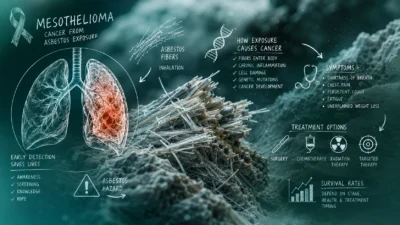
Asbestos exposure is the strongest established risk factor for mesothelioma.
Asbestos is a group of naturally occurring fibrous minerals that were widely used because of properties such as heat resistance, durability, and insulation capacity. Historically, asbestos appeared in construction materials, insulation, roofing products, cement products, shipbuilding materials, industrial equipment, and other applications.
Exposure usually occurs when asbestos-containing material releases microscopic fibers into the air. These fibers can be inhaled and deposited in the respiratory system and surrounding tissues.
The WHO states that all forms of asbestos, including chrysotile, are carcinogenic.
Not everyone exposed to asbestos develops mesothelioma. Risk is influenced by multiple factors, including cumulative exposure and the characteristics of the exposure. Occupational exposure remains the strongest and most common recognized risk factor.
Who Is Most at Risk of Asbestos Exposure?
The pattern of risk varies across countries and historical periods, but several exposure pathways are particularly important.
Occupational Exposure
Historically, many of the highest exposures occurred in workplaces where asbestos was mined, processed, installed, cut, removed, or disturbed.
Potentially exposed occupations have included workers involved in:
- asbestos mining and processing;
- construction and demolition;
- shipbuilding and ship repair;
- insulation installation and removal;
- asbestos-cement manufacturing;
- industrial maintenance;
- power generation;
- railway work;
- boiler and pipe maintenance;
- automotive brake and clutch work in settings involving asbestos-containing components.
The exact level of risk varies considerably between jobs, countries, periods, workplace controls, and individual exposure histories.
Workers renovating or demolishing older buildings may still face exposure risks in countries where asbestos-containing materials remain in place, even after new use has been prohibited.
Household or Take-Home Exposure
Asbestos exposure is not limited to workers.
Historically, fibers could be carried from workplaces into homes on clothing, footwear, hair, tools, or personal belongings. Family members could then be exposed while handling contaminated work clothes or through dust brought into the household.
Modern occupational controls are intended to prevent this pathway, but historical household exposure remains relevant when clinicians assess a patient’s exposure history.
Environmental Exposure
Communities may also be exposed to asbestos or other hazardous mineral fibers through environmental sources.
Potential exposure can occur near mines, processing facilities, waste sites, or locations where naturally occurring fibrous minerals are disturbed. The risk depends on the mineral involved, airborne fiber concentration, duration of exposure, and other environmental factors.
Environmental exposure research is particularly important because a person may develop mesothelioma without remembering direct occupational contact with asbestos.
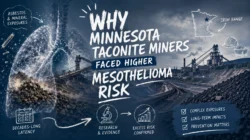
Why Mesothelioma Can Appear Decades After Exposure
One of the most important features of mesothelioma is its long latency period.
Latency refers to the interval between the relevant exposure and the development or diagnosis of disease. It does not mean the interval between diagnosis and symptoms.
Mesothelioma often develops several decades after asbestos exposure. The Agency for Toxic Substances and Disease Registry notes that signs may not appear until approximately 30 to 40 years after exposure, although individual latency periods vary.
This long delay has major implications for public health.
A country can ban asbestos today and still experience mesothelioma cases for decades because many people were exposed before the ban. For the same reason, current disease rates often reflect industrial practices from the distant past rather than only present-day exposure.
This is why claims that an asbestos ban immediately makes a country free of mesothelioma are inaccurate.
Mesothelioma in Canada
Canada has a complex history with asbestos because the country was once an important producer and exporter of the mineral.
The previous version of this article stated that asbestos-based products had been completely banned in Canada since June 2011. That timeline is inaccurate.
Canada’s federal Prohibition of Asbestos and Products Containing Asbestos Regulations came into force on December 30, 2018. The regulations prohibit major forms of importation, sale, and use of asbestos and the manufacture, importation, sale, and use of products containing asbestos, subject to regulatory provisions and limited exclusions.
The Canadian experience demonstrates an important epidemiological principle: prohibition of future uses reduces opportunities for new exposure, but it does not erase the consequences of exposures that occurred decades earlier.
Older buildings and historical occupational exposure can remain relevant to prevention, surveillance, and clinical exposure assessment.
Mesothelioma in India
India presents a different asbestos context.
The old article suggested that asbestos was banned in India in 2011. That claim is misleading. Available analyses indicate that chrysotile asbestos has not been subject to a comprehensive national ban on use and importation.
This distinction matters. Restrictions on mining or specific applications should not be confused with a comprehensive prohibition covering importation, manufacture, and use.
India’s situation also illustrates a broader global challenge. Countries where asbestos-containing products continue to circulate may face future disease burdens that are difficult to estimate from present cancer statistics alone.
Because mesothelioma has a long latency period, current exposure prevention can affect disease patterns many years into the future.
Accurate assessment also depends on occupational disease surveillance, reliable cancer registration, pathology services, and the ability to reconstruct past exposure histories.
Mesothelioma in the United Kingdom
The United Kingdom has experienced a substantial mesothelioma burden associated with historical occupational asbestos exposure.
All asbestos use was banned in the United Kingdom by 1999, but asbestos-containing materials remain present in many older buildings. The Health and Safety Executive (HSE) states that asbestos-related diseases typically take decades to develop and that asbestos remains a major cause of work-related death in Great Britain.
Official statistics continue to track mesothelioma and asbestosis mortality in Great Britain. The persistence of deaths decades after major exposures occurred is a clear example of the effect of long disease latency.
The UK experience shows why prevention must include both prohibition of new asbestos use and careful management of asbestos already present in buildings and infrastructure.
Other Possible Mesothelioma Risk Factors
Asbestos dominates mesothelioma risk, but researchers have investigated other factors.
Evidence strength varies considerably, and these factors should not be presented as equivalent to asbestos exposure.
Exposure to Certain Fibrous Minerals
Research has linked some naturally occurring fibrous minerals, particularly erionite, with mesothelioma in heavily exposed populations.
These exposures are geographically specific and much less common than the historical occupational asbestos exposure responsible for most mesothelioma cases.
Genetic Susceptibility
Rare inherited genetic changes may increase susceptibility to mesothelioma and certain other cancers.
Research has focused particularly on germline changes involving BAP1. Genetic susceptibility does not mean that most mesothelioma is inherited, nor does having a genetic variant guarantee that cancer will develop.
Genetic counseling and testing decisions should be made with qualified professionals, particularly when a family has an unusual pattern of mesothelioma or cancers associated with a hereditary tumor predisposition syndrome.
Previous Radiation Exposure
Some studies and clinical sources recognize previous therapeutic radiation exposure as a possible risk factor in a small subset of cases.
The absolute risk appears to be low, and people who previously received radiation therapy should not assume that they will develop mesothelioma. Individual risk depends on the treatment field, dose, time since exposure, and other factors.
Smoking and Mesothelioma Risk
Smoking is not considered a major cause of mesothelioma.
This distinction is important because mesothelioma is often mistakenly described as a form of lung cancer. It is not. Mesothelioma develops from mesothelial tissue, while lung cancer originates in lung tissue.
However, smoking and asbestos exposure are both important in discussions of lung cancer risk. Their relationship to lung cancer should not be confused with the risk profile of mesothelioma.
People with a history of asbestos exposure should provide their clinicians with both occupational and smoking histories because these factors can be relevant to broader respiratory and cancer risk assessment.
Common Symptoms of Mesothelioma
Mesothelioma symptoms depend on where the cancer develops and how advanced it is.
Possible symptoms of pleural disease include:
- shortness of breath;
- persistent chest pain;
- persistent cough;
- unexplained fatigue;
- reduced appetite;
- unexplained weight loss;
- fluid accumulation around the lung.
Possible symptoms of peritoneal disease include:
- abdominal pain;
- abdominal swelling;
- fluid accumulation in the abdomen;
- nausea;
- reduced appetite;
- changes in bowel habits;
- unexplained weight loss.
These symptoms are nonspecific. Having one or more of them does not mean a person has mesothelioma.
However, persistent or unexplained symptoms deserve medical assessment, particularly when there is a known history of occupational, household, or environmental asbestos exposure.
How Mesothelioma Is Diagnosed
There is no single symptom or routine blood test that can independently confirm mesothelioma.
Diagnosis generally begins with a medical history and physical examination. A detailed exposure history can be particularly valuable because relevant asbestos contact may have occurred decades earlier.
Clinicians may then use imaging studies to evaluate suspicious abnormalities.
Chest X-Ray
A chest X-ray may identify findings such as pleural abnormalities or fluid accumulation, but it cannot by itself establish a definitive mesothelioma diagnosis.
CT Scan
Computed tomography provides detailed cross-sectional images and is commonly used to assess the location and extent of abnormalities within the chest or abdomen.
MRI
Magnetic resonance imaging may be useful in selected situations, particularly when clinicians need additional information about local tumor involvement.
PET Imaging
Positron emission tomography may contribute to disease assessment and staging in appropriate clinical contexts.
Imaging can identify suspicious disease, but tissue examination is generally central to establishing a definitive diagnosis.
Why Biopsy and Histopathology Matter
A biopsy provides tissue for microscopic examination by a pathologist.
Histopathology helps determine whether a tumor is mesothelioma and distinguish it from other malignancies that can resemble it clinically or radiologically.
Mesothelioma has several major histologic patterns, including:
Epithelioid
Epithelioid mesothelioma is the most common histologic pattern. Histology can influence prognosis and treatment planning, but individual outcomes depend on many additional clinical factors.
Sarcomatoid
Sarcomatoid mesothelioma has a different microscopic appearance and biological behavior. It must be distinguished carefully from other spindle-cell malignancies.
Biphasic
Biphasic mesothelioma contains both epithelioid and sarcomatoid components.
Accurate classification requires appropriate tissue sampling and specialist pathological evaluation. Small or inadequate samples can make classification more difficult.
Mesothelioma Staging
Staging describes how far cancer has spread and helps guide treatment planning and prognosis discussions.
The National Cancer Institute explains that mesothelioma staging uses the TNM framework, which evaluates the primary tumor, regional lymph nodes, and distant metastasis before grouping the findings into overall stages.
In simplified terms:
- T describes the primary tumor and its local extent.
- N describes involvement of regional lymph nodes.
- M describes distant metastatic spread.
The detailed TNM classification is primarily established for pleural mesothelioma. Staging approaches for other anatomical forms, particularly peritoneal mesothelioma, are not necessarily identical and should not be generalized from pleural disease.
Patients should discuss staging with their oncology team because the meaning of individual findings depends on the anatomical site, pathology, imaging, and other clinical information.
Risk Factors Are Not the Same as Prognostic Factors
The old article treated risk factors and prognostic factors as if they were interchangeable. They answer different questions.
A risk factor is associated with the probability of developing a disease. Asbestos exposure is the central example in mesothelioma.
A prognostic factor provides information about the likely course or outcome after a person has already been diagnosed.
Mesothelioma prognosis may be influenced by factors such as:
- anatomical site;
- stage and extent of disease;
- histologic subtype;
- overall health and functional status;
- age and coexisting medical conditions;
- whether the disease can be treated with particular local or systemic approaches;
- response to treatment.
Prognosis statistics describe groups of patients and cannot predict exactly what will happen to one individual.
Supporting Someone With Mesothelioma
A mesothelioma diagnosis can create physical, emotional, practical, and financial challenges for patients and families.
Useful support may include:
- oncology social work;
- psychological counseling;
- palliative and supportive care;
- symptom management;
- rehabilitation services;
- home health services when clinically appropriate;
- spiritual care according to the patient’s preferences;
- caregiver support;
- patient support groups.
Supportive care should not be confused with giving up on cancer-directed treatment. Palliative care can be provided alongside oncology treatment and focuses on symptoms, quality of life, communication, and patient goals.
Patients differ in how much they want to discuss their illness. Some find group support valuable, while others prefer individual counseling, family conversations, or private forms of support. Care should reflect the patient’s preferences rather than assuming that one model works for everyone.
Can Mesothelioma Be Prevented?
The most effective population-level strategy is preventing asbestos exposure.
The WHO identifies stopping the use of all forms of asbestos as the most efficient way to eliminate asbestos-related diseases.
At the individual and workplace level, prevention may involve:
- identifying asbestos-containing materials before renovation or demolition;
- following occupational exposure controls and applicable regulations;
- using qualified asbestos professionals when removal or disturbance is necessary;
- preventing contaminated work clothing or equipment from entering the home;
- avoiding unnecessary disturbance of suspected asbestos-containing materials.
People should not drill, sand, cut, break, or remove suspected asbestos-containing materials without appropriate assessment and controls. Disturbance can release fibers into the air.
When to Seek Medical Advice
A history of asbestos exposure does not mean that a person will develop mesothelioma. At the same time, a relevant exposure history can be important medical information.
Consider discussing possible exposure with a healthcare professional if you:
- worked directly with asbestos or asbestos-containing materials;
- worked in a high-risk historical industry;
- lived with someone who regularly worked around asbestos;
- lived near a significant source of environmental exposure;
- have persistent respiratory or abdominal symptoms and a possible exposure history.
There is no universal screening program appropriate for every person who has ever encountered asbestos. Follow-up decisions should be individualized according to exposure history, symptoms, age, medical history, and local clinical guidance.
The Global Outlook
Mesothelioma illustrates how environmental and occupational exposures can create health consequences that continue long after the original exposure.
Countries with extensive historical asbestos use may continue to see cases because of the disease’s long latency period. Countries where asbestos remains in use or exposure controls are inadequate may face future disease burdens that are not yet fully visible in current statistics.
The most important lesson is consistent across regions: preventing exposure matters.
Accurate surveillance, occupational protections, responsible management of existing asbestos-containing materials, reliable diagnosis, specialist cancer care, and long-term public health policy all have roles in reducing the impact of mesothelioma.
For individuals, awareness of a past exposure history can help clinicians interpret persistent symptoms and make appropriate decisions about further evaluation. For governments and industries, preventing new exposure remains the central strategy for reducing future asbestos-related disease.
Writer: Salwa Alifah Yusrina
- About the Author
- Latest Posts

Salwa Alifah Yusrina is the Editor-in-Chief at Medslat.com. She is a professional Nutritionist with over 7 years of clinical and research experience. She holds a Master’s degree in Nutrition Science from Hasanuddin University. At Medslat.com, she oversees the editorial direction and ensures that all health and nutrition content adheres to the highest standards of accuracy and evidence-based science.